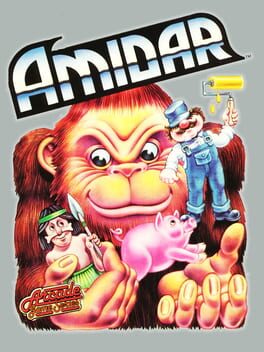
Amidar
Amidar — frequently asked questions
- Is Amidar on Steam?
- No. Amidar is not distributed on Steam, so there is no Steam Charts or SteamDB player count for it. Its live popularity is tracked here via Twitch viewership instead.
- What platforms is Amidar on?
- Amidar is available on Arcade, BBC Microcomputer System, Atari 2600, NEC PC-6000 Series, PV-1000.
- When did Amidar release?
- Amidar was first released on December 31, 1981.
About Amidar
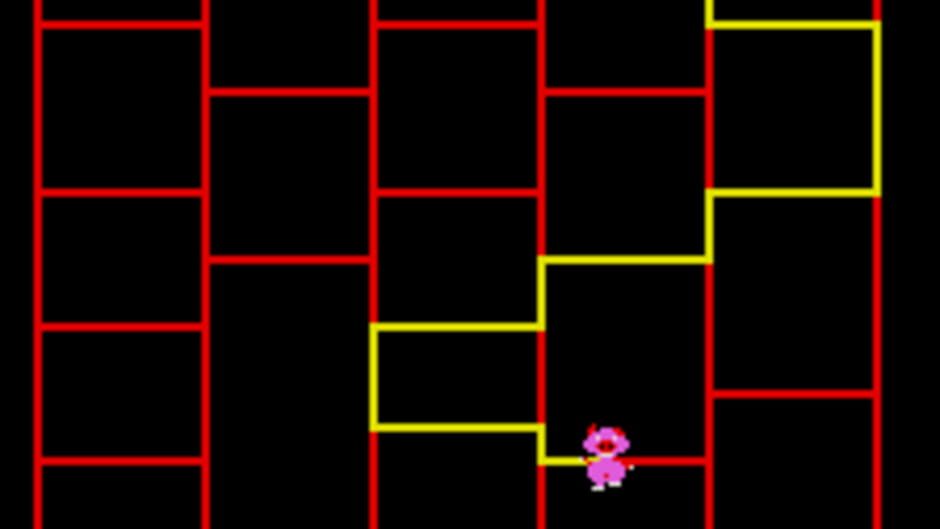
Amidar is an arcade game programmed by Konami and published in 1981 by Stern. Its basic format is similar to that of Pac-Man: the player moves around a fixed rectilinear lattice, attempting to visit each location on the board while avoiding the enemies. When each spot has been visited, the player moves to the next level. The game and its name have their roots in the Japanese lot drawing game Amidakuji. The bonus level in Amidar is a nearly exact replication of an Amidakuji game and the way the enemies move conform to the Amidakuji rules - this is referred to in the attract sequence as 'Amidar movement'. A version for the BBC Micro was created but never released.
Summary via IGDB.
Game details
- Platforms
- Arcade, BBC Microcomputer System, Atari 2600, NEC PC-6000 Series, PV-1000
- Developer
- Konami
- Publisher
- Parker Brothers
- Game modes
- Single player
- Themes
- Action
Details via IGDB.
Reception
Every version compared
Prices, contemporary reception and the studio credited for each release
| Platform | Year | Loose | Complete | Sealed | Period reviews | Built by |
|---|---|---|---|---|---|---|
| Atari 2600 | 1982 | $7 | $15 | $40 | 3 reviews | Parker Bros. (designed by Ed Temple) |
Also released on: Arcade · BBC Microcomputer System · NEC PC-6000 Series · PV-1000. We haven’t priced or authenticated those versions yet.
Collector value & authenticity
Atari 2600 · PriceCharting sold data · Verified 2026-10-06
Label variants
| Release | Loose | Complete | Sealed |
|---|---|---|---|
| Spiderdroid | $16 | $38 | $43 |
Release record
| Territory | Label | Catalog # | Rarity |
|---|---|---|---|
| North America Froggo | Standard | FG1002 | Scarce |
| North America Parker Brothers | Standard | PB5310 | Common+ |
| Australia Rainbow Vision | — | SS-006 | — |
Also released in South America by VGS.
Source: Catalog numbers, label types, rarity, controllers and player counts: AtariAge 2600 software database
- Region
- NA+EU
- Released
- 1982
- Controller
- Atari Joystick
- Players
- 1
- Authenticity
- Low
Parker Brothers' conversion of the arcade game that started grid-capture maze games, cheap and easy to find.
Konami's 1982 arcade Amidar was the first grid-capture maze game: you trace the lines of a fixed lattice, filling in each rectangle you surround, while enemies chase you. Its name and enemy movement come from Amidakuji, a Japanese lot-drawing game. Parker Brothers published the Atari 2600 version in late 1982, with Ed Temple credited as designer.
The same game also turns up under two other names, Spiderdroid and Netmaker.
What the press said at the time
| Computer Entertainer Vol. 1 No. 9 | December 1982 | Graphics ★★½ · Play-Action ★★½ |
| Electronic Fun with Computers & Games Vol. 1 No. 6 | April 1983 | 2 joysticks |
| Arcade Express Vol. 1 No. 15 | February 27, 1983 | 7/10 |
“For a maze-chase game, this one moves more slowly than you might expect, and we found it just too much of the same thing, over and over again. Not recommended.”
“What we do know is that Amidar is a disappointment. … If you want a slow, boring strategy game, with difficult controls, Parker Brothers' Amidar is for you. If not, save your money.”
“The play is a trifle slow, the graphics aren't quite as definitive as they should be, but the bottom line is this: Amidar is a fine game, rendered faithfully and differently enough to make for a truly enjoyable change of pace.”
“the inability of the 2600 to reproduce detailed visual images undercuts "Amidar"s cute game appeal somewhat.”
Computer Entertainer rated graphics first and play action second, from four symbols (excellent) to one (poor) — stars in most years, diamonds in 1986–87 — comparing each game only with other games for the same system. Electronic Fun rated games out of four joysticks.
Cartridge & preservation record
Program size 4 KB, measured from the preserved dump.
Catalogue number as recorded for the physical release.
How the Atari 2600 version differs
The 2600 version was later reskinned and sold by Froggo in 1987 as Spiderdroid.
Also on other platforms
Arcade · PV-1000
| Atari 2600 | Parker Bros. (designed by Ed Temple) |
| Arcade | Konami |
| PV-1000 | Casio (publisher) |
Worth knowing
- Sold as "rare" in 1986. By spring 1986 the 2600 market had moved on far enough that Computer Entertainer's mail-order list sold brand-new copies under the heading "RARE GAMES — THESE ARE YOUR SPECIAL PRICES", at $19.00 (good through 10 May 1986).
Before you buy
Low risk and common. Check which label you are looking at: the standard Amidar cart is the cheapest, while the Spiderdroid label is priced as its own variant and costs more. Collectors pay for the label name, not a different game, so make sure the listing title matches the photo of the label.
Amidar screenshots
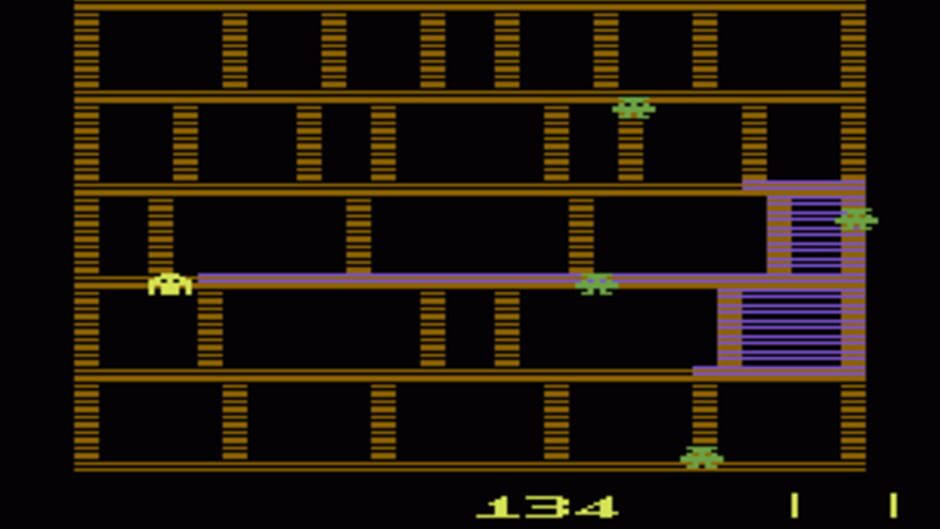
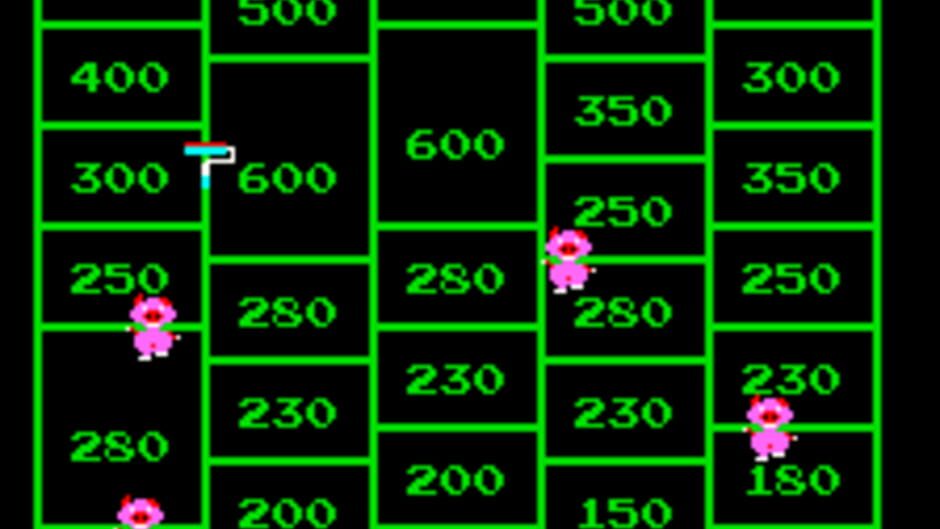
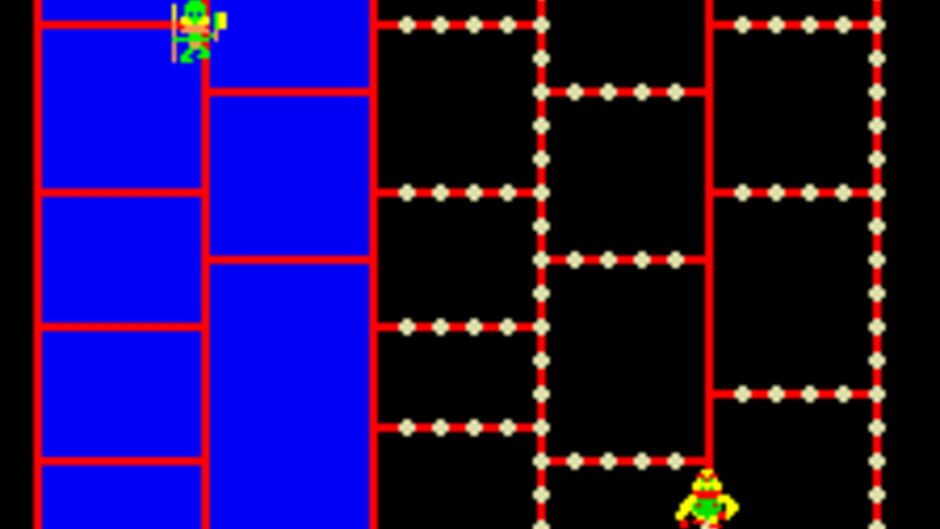
Watch on YouTube
Listings on The Game Traders
No active listings for Amidar yet.
Be the first to list →Buyers looking for this
No active want ads for Amidar yet.
Post a want ad →Popular games right now





Latest news mentioning Amidar
No recent news mentions in our 30-day feed window.