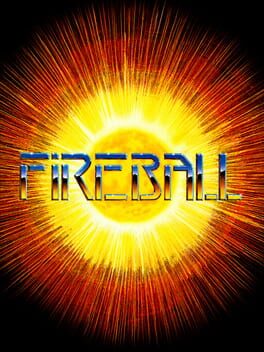
Fireball
Fireball — frequently asked questions
- Is Fireball on Steam?
- No. Fireball is not distributed on Steam, so there is no Steam Charts or SteamDB player count for it. Its live popularity is tracked here via Twitch viewership instead.
- What platforms is Fireball on?
- Fireball is available on Atari 2600.
- When did Fireball release?
- Fireball was first released on December 31, 1982.
About Fireball
Juggle the red hot Fireball... before it becomes too hot to handle! Featuring: Up to six randomly moving Fireballs; Up to four players; Automatic indication of high scores for each player in the current session; Catch, aim, and release the Fireball. Five exciting games: Firetrap, Marching Blocks, Knock-a-Block, Migrating Blocks, and Cascade.
Summary via IGDB.
Fireball on Wikipedia
Fireball is a 1982 Breakout clone video game developed by Scott Nelson for the Atari 2600. It was published by Arcadia, whose name changed to "Starpath" during development. Released on cassette tape, the game required the Starpath Supercharger add-on to play. Fireball was one of four launch titles released alongside the add-on, and the only of the four to use the Atari's paddle controllers.
Source: Wikipedia (text under CC BY-SA 4.0).
Game details
- Platforms
- Atari 2600
- Developer
- Arcadia Corporation
- Publisher
- Arcadia Corporation
- Game modes
- Single player, Multiplayer
- Themes
- Action
Details via IGDB.
Collector value & authenticity
Atari 2600 · PriceCharting sold data · Verified 2026-10-06
Release record
| Territory | Label | Catalog # | Rarity |
|---|---|---|---|
| North America Starpath | Cassette | AR4300 | Scarce+ |
Source: Catalog numbers, label types, rarity, controllers and player counts: AtariAge 2600 software database
- Region
- NA+EU
- Released
- 1982
- Controller
- Atari Paddles
- Players
- 1 - 4
- Authenticity
- Low
Starpath's paddle-driven Breakout with a juggler, the oddball of the Supercharger launch tapes.
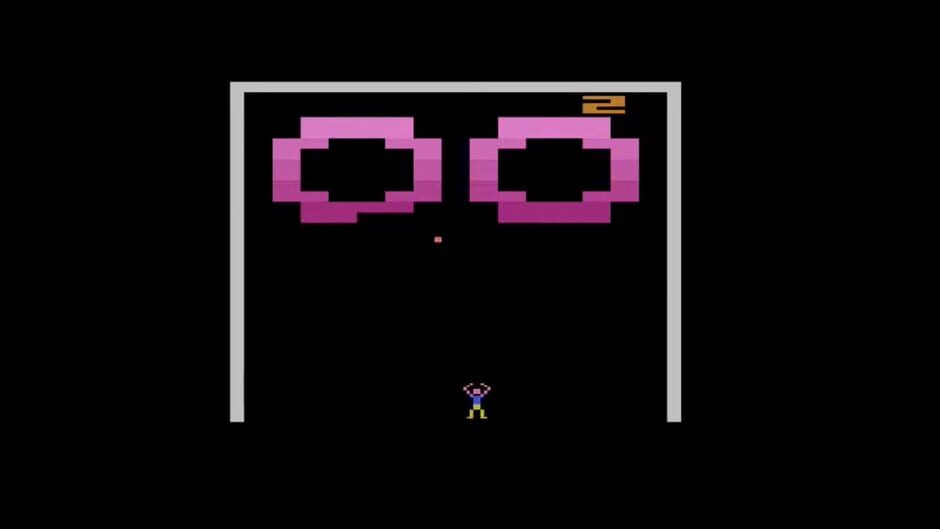
Scott Nelson made Fireball, and it came out in August 1982 as one of four launch titles for the Supercharger. The publisher was called Arcadia, renamed Starpath during development. It is a Breakout-style game that uses the Supercharger's extra memory to replace the usual paddle bat with an animated juggler, across five play modes.
It was the only one of the four launch tapes to use the paddle controllers. Reviews were generally positive, but more complex Starpath titles overshadowed it.
How it was made
Developed by Scott Nelson and released in August 1982 on cassette, one of four tapes launched alongside the Supercharger.
What the press said at the time
| Computer Entertainer Vol. 1 No. 7 | October 1982 | Graphics ★★½ · Play-Action ★★½ |
“even the least coordinated player is likely to be bored silly by the snail's pace of this one. Play action ranges from only fair (Knock-A-Block) to good (Cascade). Not recommended.”
“Arcadia's supercharged version of Breakout is, for a change, a copy that is bet- ter than the original. … The game-play and graphics are terrific”
Computer Entertainer rated graphics first and play action second, from four symbols (excellent) to one (poor) — stars in most years, diamonds in 1986–87 — comparing each game only with other games for the same system.
Cartridge & preservation record
Program size 8.3 KB (8,448 bytes), measured from the preserved dump.
Catalogue number as recorded for the physical release.
Before you buy
This is a cassette, not a cartridge. To play it you need a Starpath Supercharger plugged into the console, a cassette player with an earphone output and a working pair of paddles. Ask the seller to confirm the tape loads, not just that it plays sound; Side A is the quick-load side and Side B the standard-load side. Check that the label is printed on the cassette shell, and be wary of a blank or home-labeled cassette in an original box.
Authenticity & condition — Atari 2600
Specific to the format this title shipped in
Buying a Starpath Supercharger game
This game is an audio cassette, not a cartridge. It loads through the Starpath (originally "Arcadia") Supercharger, a long cartridge with extra RAM and a cable that plugs into a cassette player, so the tape on its own will not play on a 2600.
- You need three things: the Supercharger, a cassette player with an earphone (or "ear"/"monitor") output, and the Supercharger's built-in cable.
- Ask the seller to confirm the tape LOADS, not just that it plays audio. Side A is the quick-load side and Side B the standard load; Starpath's own manual warns some players will not load the quick side reliably, so a tape that loads from Side B only is normal. A tape that loads from neither side is the real failure.
- Set the player's volume and tone near maximum and keep it away from the TV, as Starpath's manual advises. Expect the occasional reload.
- The Supercharger works on the 2600, 2600 Jr. and Sears Video Arcade, but may fail on some later NTSC Atari 7800s. We found no confirmation that it works on the Atari 2600+, so assume it does not until you have tested it.
- A cassette is trivially copied. On the higher-value tapes, check that the label is printed on the cassette shell itself and that both sides load, and be wary of a blank or home-labelled tape in an original box. (Our inference; we found no documented fraud case.)
- Check the Supercharger's own cable for breaks near the strain relief — it is the single point of failure for every tape you own.
What a complete copy includes
- Cassette
- Instruction booklet
- Retail box or sleeve
- The Supercharger itself shipped with its attached cable, a manual and the Phaser Patrol tape. Early units are "Arcadia"-branded and later ones "Starpath"; both are genuine. The company had to drop the Arcadia name because Emerson's Arcadia 2001 console reached shelves first (Arcade Express, 26 September 1982).
Fireball screenshots
Watch on YouTube
Listings on The Game Traders
No active listings for Fireball yet.
Be the first to list →Buyers looking for this
No active want ads for Fireball yet.
Post a want ad →Popular games right now




Latest news mentioning Fireball
No recent news mentions in our 30-day feed window.