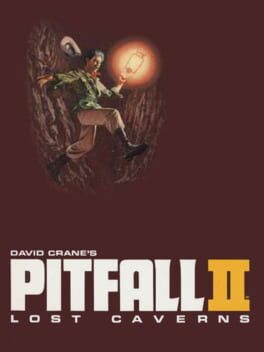
Pitfall II: The Lost Caverns
Pitfall II: The Lost Caverns — frequently asked questions
- Is Pitfall II: The Lost Caverns on Steam?
- No. Pitfall II: The Lost Caverns is not distributed on Steam, so there is no Steam Charts or SteamDB player count for it. Its live popularity is tracked here via Twitch viewership instead.
- What platforms is Pitfall II: The Lost Caverns on?
- Pitfall II: The Lost Caverns is available on ColecoVision, Arcade, SG-1000, Atari 2600, Atari 8-bit, Commodore C64/128/MAX, ZX Spectrum, TRS-80 Color Computer, DOS, Apple II, MSX, Atari 5200, Commodore 64, IBM PCjr.
- When did Pitfall II: The Lost Caverns release?
- Pitfall II: The Lost Caverns was first released on February 17, 1984.
About Pitfall II: The Lost Caverns
Pitfall II: The Lost Caverns is the sequel to Pitfall and was released for a variety of systems during the mid-1980s including the SG-1000 in 1985. It was also ported to Sega System 1 arcade hardware by Sega. Gameplay is similar to the original game, but the levels are more maze-like. Sega's version of Pitfall II was tweaked significantly from its western counterparts released for the Atari 2600, ColecoVision etc. The gameplay is largely the same, but there are many additions. These include a Lives system, mine-carts, balloons, and a final Demon boss. The increased specifications of System 1 hardware means the arcade version is much more detailed and allows the player to see more of the maze at one time. The SG-1000 version is directly inspired by the arcade game, and though cannot match the same level of graphical quality, it is arguably the nicest looking home port of the game.
Summary via IGDB.
Game details
- Platforms
- ColecoVision, Arcade, SG-1000, Atari 2600, Atari 8-bit, Commodore C64/128/MAX, ZX Spectrum, TRS-80 Color Computer, DOS, Apple II, MSX, Atari 5200, Commodore 64, IBM PCjr
- Developer
- Activision
- Publisher
- Tandy
- Game modes
- Single player
- Themes
- Action
Details via IGDB.
Reception
Every version compared
Prices, contemporary reception and the studio credited for each release
| Platform | Year | Loose | Complete | Sealed | Period reviews | Built by |
|---|---|---|---|---|---|---|
| Atari 2600 | 1984 | $31 | $106 | $229 | Graphics ★★★★ · Play-Action ★★★★ | Activision (designed by David Crane) |
Also released on: ColecoVision · Arcade · SG-1000 · Atari 8-bit · Commodore C64/128/MAX · ZX Spectrum · TRS-80 Color Computer · DOS · Apple II · MSX · Atari 5200 · Commodore 64 · IBM PCjr. We haven’t priced or authenticated those versions yet.
Collector value & authenticity
Atari 2600 · PriceCharting sold data · Verified 2026-10-06
Release record
| Territory | Label | Catalog # | Rarity |
|---|---|---|---|
| North America Activision | Special | AB-035 | Scarce+ |
Source: Catalog numbers, label types, rarity, controllers and player counts: AtariAge 2600 software database
- Region
- NA+EU
- Released
- 1984
- Controller
- Atari Joystick
- Players
- 1
- Authenticity
- Low
David Crane's sequel needed a custom chip to exist, and it is widely ranked among the best games on the console.
Pitfall II: Lost Caverns is the 1984 sequel to Pitfall!, designed by David Crane and published by Activision for the 2600 in early 1984. Pitfall Harry explores the caverns of Peru for the Raj diamond while rescuing his niece Rhonda and their animal friend Quickclaw. Enemies and hazards cost you points and send you back to a checkpoint, and it is among the first games to include a checkpoint system.
Crane decided the 2600 hardware was out of date for what he wanted, so he designed a custom Display Processor Chip that sits in the cartridge. It gives the game more complex graphics and background music than the console could manage on its own. Reviewers at the time found it better than the original, it became the top-selling console game of its year, and Retro Gamer later named it the best game on the 2600.
How it was made
Designed by David Crane at Activision. Because the standard 2600 could not deliver the graphics and music he wanted, Crane created the Display Processor Chip, a custom chip built into the Pitfall II cartridge.
What the press said at the time
| Computer Entertainer Vol. 2 No. 11 | February 1984 | Graphics ★★★★ · Play-Action ★★★★ |
“Many gamers consider Pitfall! II a videogame landmark which bridges the gap to computer software.”
“We could have spent hours playing this game, which we found much more exciting than the original Pitfall. … The graphics are beautiful, the sound magnificent, and the play action is thoroughly engrossing.”
“Pitfall II offers the most remarkable breadth of any 2600 videogame yet produced. … Is it worth the price? Absolutely. Pitfall II is a must-have item for all 2600 owners.”
“The graphics on this 27-level maze-adventure are truly outstanding, among the best ever created for this system.”
Computer Entertainer rated graphics first and play action second, from four symbols (excellent) to one (poor) — stars in most years, diamonds in 1986–87 — comparing each game only with other games for the same system.
Cartridge & preservation record
Program size 10.2 KB (10,495 bytes), measured from the preserved dump.
Catalogue number as recorded for the physical release.
How the Atari 2600 version differs
The 2600 cartridge carries David Crane's custom Display Processor Chip, which added graphics capability and a music circuit. It made Pitfall II the first 2600 game with a fully scored polyphonic soundtrack, and no other 2600 game used the chip.
Because of the chip, the 2600 cartridge sold for $34.95, more than the usual game for the system.
The Atari 800 and 5200 versions have more areas to explore than the 2600 original. Their porter added new levels that appear after the first game is completed.
Also on other platforms
Atari 5200 · Atari 8-bit · ColecoVision · Commodore 64 · IBM PCjr · Apple II · MSX · ZX Spectrum
| Atari 2600 | Activision (designed by David Crane) |
| Atari 8-bit | Activision (ported by Mike Lorenzen) |
| Atari 5200 | Activision (ported by Mike Lorenzen) |
| ColecoVision | Activision (programmed by Robert Rutowski) |
| Commodore 64 | Activision (programmed by Tim Shotter) |
- Atari 8-bit. Mike Lorenzen's Atari 800 and 5200 port reused Crane's code with new graphics routines and adds extra levels after the main game, subtitled "The Adventurer's Edition" on the title screen.
- ColecoVision. Written from scratch rather than converted from the 2600 code.
Worth knowing
- Bigger chip, bigger price. Electronic Games described "a game matrix comprised of an incredible 8 screens wide and 28 screens deep" with "four-piece musical accompaniment", and noted that its new chip "balloons both the memory capacity of the 2600 and the game's retail price, an unusually high $34.95."
- 1985 Arkie Award. Pitfall II won Best Adventure Videogame in Electronic Games' 1985 Arkie Awards.
Before you buy
Low risk for counterfeits, since an Activision cart with a custom chip is not an obvious target. Atari has announced a line of new Activision cartridges from November 2026, so confirm a listing is a 1980s original rather than a modern reissue. Sealed copies are priced well above complete ones; treat a sealed purchase as buying packaging.
Pitfall II: The Lost Caverns screenshots
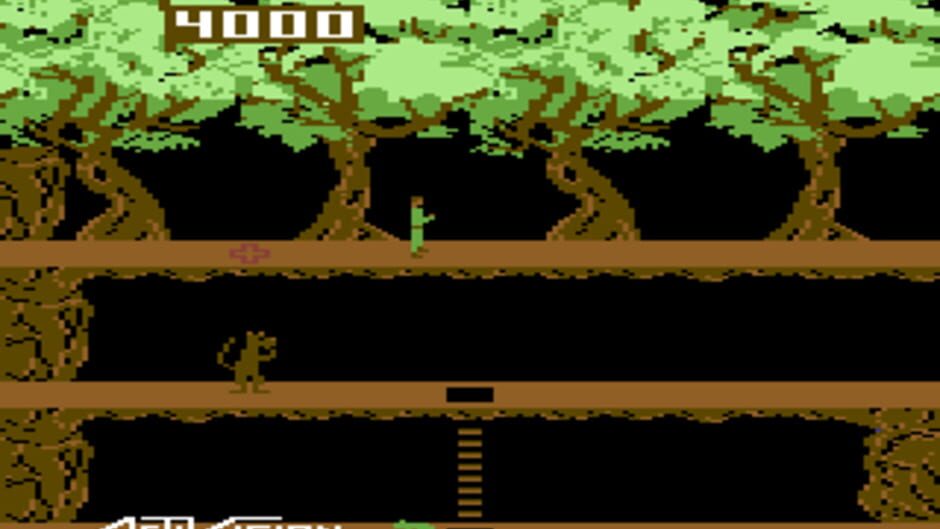
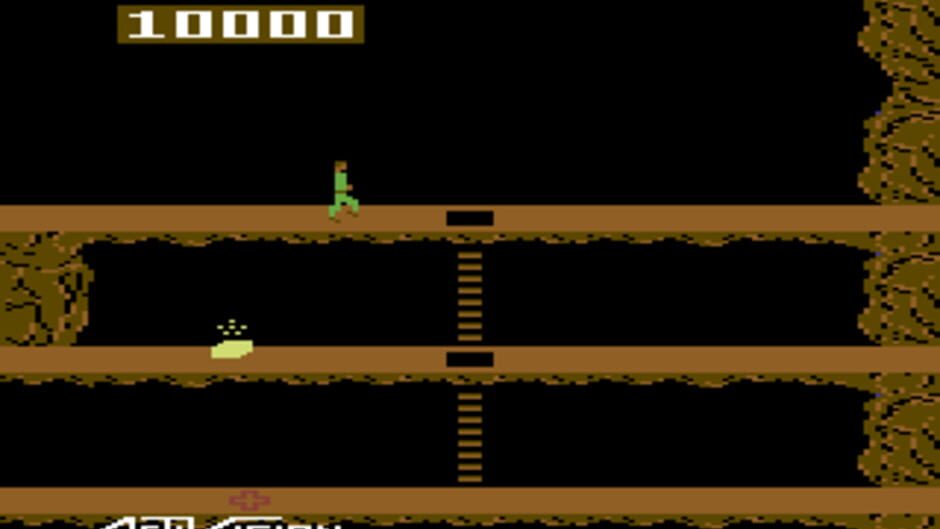
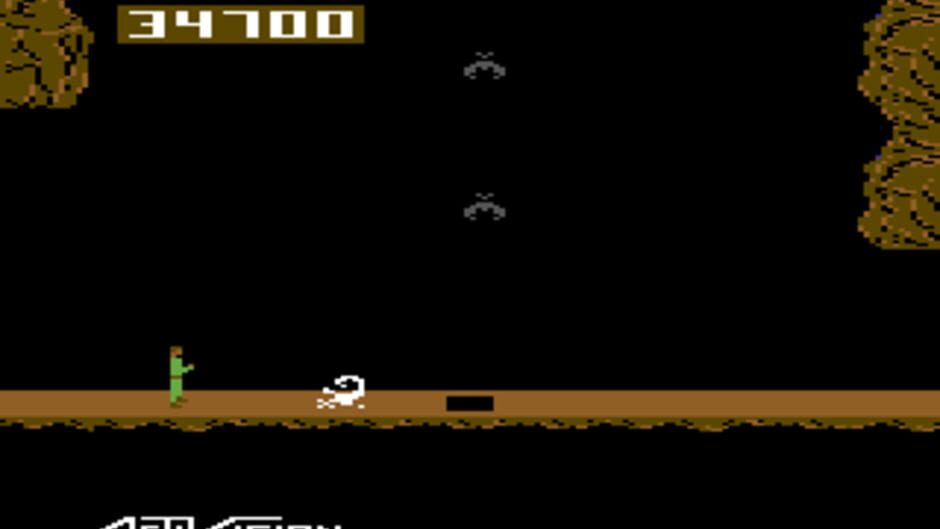
Watch on YouTube
Listings on The Game Traders
No active listings for Pitfall II: The Lost Caverns yet.
Be the first to list →Buyers looking for this
No active want ads for Pitfall II: The Lost Caverns yet.
Post a want ad →Popular games right now





Latest news mentioning Pitfall II: The Lost Caverns
No recent news mentions in our 30-day feed window.