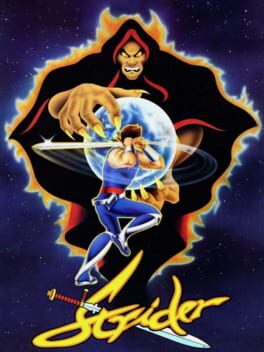
Strider
Strider — frequently asked questions
- What platforms is Strider on?
- Strider was released on Arcade, Sharp X68000, Commodore C64/128/MAX, ZX Spectrum, Wii, Sega Mega Drive/Genesis, Atari ST/STE, DOS, Amiga, Wii U, PlayStation, Amstrad CPC, Sega Master System/Mark III, Sega Master System, PC Engine CD, PC (Microsoft Windows), TurboGrafx-16/PC Engine, Nintendo Entertainment System.
- When did Strider release?
- Strider was first released on March 1, 1989.
About Strider
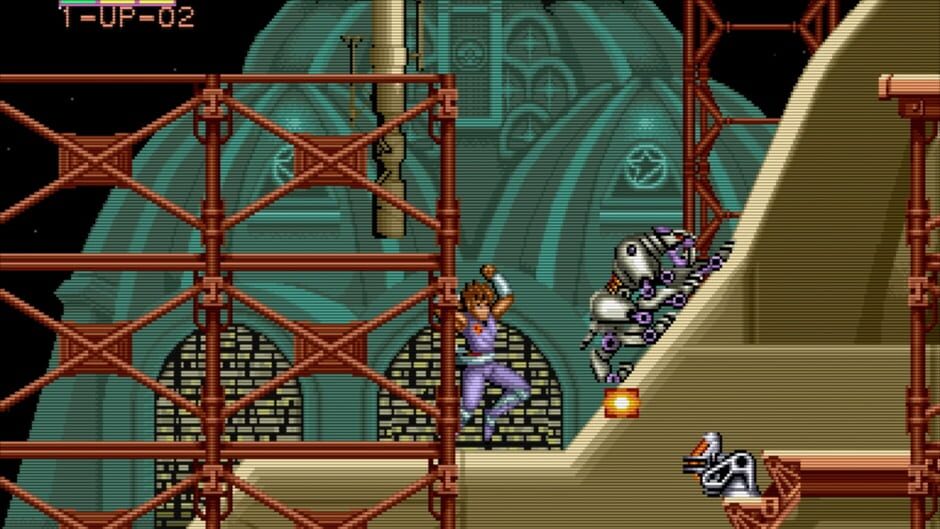
The controls of Strider consist of an eight-way joystick and two action buttons for attacking and jumping. The player controls Hiryu himself, whose main weapon is a tonfa-like plasma sword known as "Cypher". He can perform numerous acrobatic feats depending on the joystick/button combination used. Pressing the jump button while Hiryu is standing still will cause him to do a regular vertical jump, while pressing the jump button while pushing the joystick left or right will enable him to do a cartwheel jump. Hiryu can also slide under or through certain obstacles and enemies by first crouching down and then pressing the jump button. As well as his sliding move, both jumps can also be used to destroy weaker opponents. Hiryu is able to latch onto certain platforms, and climb across walls and ceilings using a metallic hook. While running down a sloped surface, Hiryu can gain enough momentum to allow him to do a longer cartwheel jump than usual. Numerous power-ups can be obtained from item boxes carried by certain enemies. These includes an extension to Hiryu's attack range that lasts for one hundred slashes, two types of health aids (represented by the kanji used to write Hiryu's name: 飛 and 飛竜), a max health extension (represented by the kanji 竜, the second character in Hiryu's name), an extra life, and a power-up that not only makes Hiryu invulnerable to attack but also increases his own attack abilities via shadow images of himself for 15 seconds.[3] Hiryu can also summon robotic companions known collectively as "options" that help him fight enemies. These consist of up to two mushroom-like droids, a saber-toothed tiger and a hawk, known individually as Option A, B and C respectively. The game has five stages: the Kazakh Soviet Socialist Republic (called "St. Petersburg" during the arcade game's attract sequence), the Siberian Wilderness, the Aerial Battleship Balrog (געלראב), the Amazonian Jungle, and the Grandmaster's lair itself, the Third Moon. Each of the stages is divided into a number of smaller sections, each with their own time limit and checkpoint location. The player has a three-point health gauge (which can be increased to five points with the health extensions. Hiryu will lose a life when either his health gauge is fully depleted, by moving him off the screen entirely (like falling into a bottomless pit) or when the game's timer reaches zero. It's Game Over when all of Hiryu's lives are lost, but the player can be given the opportunity to continue.
Summary via IGDB.
Game details
- Platforms
- Arcade, Sharp X68000, Commodore C64/128/MAX, ZX Spectrum, Wii, Sega Mega Drive/Genesis, Atari ST/STE, DOS, Amiga, Wii U, PlayStation, Amstrad CPC, Sega Master System/Mark III, Sega Master System, PC Engine CD, PC (Microsoft Windows), TurboGrafx-16/PC Engine, Nintendo Entertainment System
- Developer
- Capcom
- Publisher
- Capcom
- Game modes
- Single player, Multiplayer
- Themes
- Action, Science fiction
- Series
- Strider
Details via IGDB.
Reception
Every version compared
Prices, contemporary reception and the studio credited for each release
| Platform | Year | Loose | Complete | Sealed | Period reviews | Fake risk |
|---|---|---|---|---|---|---|
| Sega Master SystemDetails ↓ | 1991 | $25 | $51 | — | 12 reviews | Low (look-alike) |
| Sega GenesisDetails ↓ | 1990 | $13 | $35 | $204 | 15 reviews | Low |
The cheapest way to own it loose is the Sega Genesis version ($13).
Also released on: Arcade · Sharp X68000 · Commodore C64/128/MAX · ZX Spectrum · Wii · Sega Mega Drive/Genesis · Atari ST/STE · DOS · Amiga · Wii U · PlayStation · Amstrad CPC · Sega Master System/Mark III · PC Engine CD · PC (Microsoft Windows) · TurboGrafx-16/PC Engine · Nintendo Entertainment System. We haven’t priced or authenticated those versions yet.
Prices are per version and are not interchangeable, and neither are the reviews: conversions in this era were often built by a different studio than the original, so a score earned on one machine says nothing about how another plays.
Collector value & authenticity
Sega Master System · PriceCharting sold data · Verified 2026-10-28
Other releases and variants
| Release | Loose | Complete | Sealed |
|---|---|---|---|
| European (PAL) release | $9 | $34 | — |
How often it sells
- Loose: about 4 times a year
- Complete: about once a month
- Sealed: about once a year
Sales frequency from PriceCharting's completed-sale records, as of 2026-10-28.
Price over time
- Loose
- Complete
A loose copy sold for about $35 in Jul 2009, $26 five years ago, and $25 as of Oct 2026.
Show as table
| Month | Loose | Complete |
|---|---|---|
| Jan 2010 | $30 | — |
| Jan 2011 | $18.48 | — |
| Jan 2012 | $20 | — |
| Jan 2013 | $15.50 | — |
| Jan 2014 | $18.99 | $29 |
| Jan 2015 | $13.38 | $33 |
| Jan 2016 | $17.47 | $33 |
| Jan 2017 | $60 | $50 |
| Jan 2018 | $23 | $47 |
| Jan 2019 | $31 | $47 |
| Jan 2020 | $19.80 | $45 |
| Jan 2021 | $24 | $41 |
| Jan 2022 | $34 | $60 |
| Jan 2023 | $34 | $158 |
| Jan 2024 | $25 | $113 |
| Jan 2025 | $21 | $61 |
| Jan 2026 | $24 | $63 |
| Oct 2026 | $25 | $51 |
Monthly price estimates from PriceCharting's completed-sale records, sampled quarterly, through Oct 2026.
Release record
| Territory | Date |
|---|---|
| North America | June 1991 |
| Europe / PAL | September 1991 |
| Brazil | 1991 |
- Region
- NA+EU+BR
- Released
- 1991
- Authenticity
- Low
The Sega Master System version
A Tiertex conversion that Mean Machines Sega found a letdown for coin-op fans, and a US cart that needs checking for the European-box sticker.
Strider on the Master System is a Tiertex conversion of the Capcom arcade game, published by Sega. It was released in North America in June 1991, Europe in September 1991 and Brazil in 1991, and it is a different game from the Genesis one that critics rated so highly.
Mean Machines Sega was lukewarm at the time. Its reviewers said fans of the coin-op would be disappointed, found the scrolling smooth and the sprites okay, but judged the playability lacking. Looking back later, they thought the shooting action had aged badly and that the game was far too easy, though one allowed it was fast and very playable.
How it was made
Developed by Tiertex, which also handled several home computer versions, and published by Sega.
What the press said at the time
| Mean Machines Sega Issue 3 | December 1992 | OVERALL 67% |
| Sega Pro Issue 19 | May 1993 | 79% |
| Sega Pro Issue 21 | July 1993 | 79% |
| Sega Pro Issue 22 | August 1993 | 79% |
| Sega Pro Issue 23 | September 1993 | 79% |
| Sega Master Force Issue 5 | November 1993 | 42% |
| Sega Pro Issue 25 | November 1993 | 79% |
| Sega Pro Issue 26 | December 1993 | 79% |
| Sega Pro Issue 28 | February 1994 | 79% |
| Sega Pro Issue 43 | April 1995 | 60% |
| AllGame | 3/5 | |
| Sega Power | 74% |
“The Megadrive version of this game was almost arcade perfect. Sadly, this is not. The graphics are OK, but it's very slow and difficult to control. The suspect collision detection and poor responsiveness seal the coffin of this disappointing release.”
“The graphics and sound are about as expected, but the main character is very sluggish and poor, especially when jumping. Long-term appeal is dubious.”
“The graphics and sound are as expected, but the main character is very sluggish, especially in iumps. Dubious long-term appeal.”
“The graphics and sound are as expected, but the main character is very sluggish, especially in jumps. Dubious long-term appeal.”
Undated scores are from the review table in the game's Wikipedia article, limited to reviews of the Sega Master System version.
Also on other platforms
Arcade · Amiga · Amstrad CPC · Atari ST · Commodore 64 · MS-DOS · PlayStation · Genesis · X68000 · PC Engine CD · ZX Spectrum · Windows · TurboGrafx-16 · Wii
| Genesis | Sega (publisher) |
- Genesis. The Genesis version is considered the most successful home version, and Electronic Gaming Monthly named it Game of the Year and Best Graphics in 1990.
How the other versions reviewed
| Genesis | ACE | 919 |
| Amiga | ACE | 910 |
| Atari ST | ACE | 910 |
| Windows | ACE | 876 |
| Arcade | AllGame | 4/5 |
| Genesis | AllGame | 4.5/5 |
| Wii | AllGame | 4/5 |
| Genesis | Computer and Video Games | 95% |
| Atari ST | Computer and Video Games | 92% |
| Windows | Computer and Video Games | 88% |
| Genesis | Electronic Gaming Monthly | 9/10, 9/10, 9/10, 9/10 |
| Genesis | Famitsu | 30/40 |
| TurboGrafx-16 | Famitsu | 20/40 |
| Genesis | GamePro | 22/25 |
| Genesis | GameSpy | 9/10 |
| Wii | Nintendo Life | 9/10 |
| Arcade | The Games Machine | Positive |
| Amiga | The Games Machine | 94% |
| Atari ST | The Games Machine | 93% |
| Windows | The Games Machine | 93% |
| Arcade | Your Sinclair | 89% |
| ZX Spectrum | Your Sinclair | 90% |
| Amiga | Zero | 81% |
| Atari ST | Zero | 84% |
| Atari ST | Atari ST User | 8/10 |
| Arcade | Commodore User | 8/10 |
| Genesis | Mean Machines | 92% |
| Genesis | Mega | 89% |
| Genesis | MegaTech | 91% |
| Genesis | Sega Power | 10/10 |
| Amiga | The One | 80% |
| Atari ST | The One | 80% |
These are the other versions’ scores, not this one’s. Ports of this era were frequently built by different studios, so they do not transfer.
Before you buy
Sega sold the US copies in European boxes with a UPC sticker over the European barcode, so look for the sticker before you pay the US price. The European cart is much cheaper loose and noticeably cheaper complete, so a European buyer should skip the American premium. The US cart sits above the middle of the US carts when loose, and the look-alike risk is low.
Collector value & authenticity
Sega Genesis · PriceCharting sold data · Verified 2026-10-29
Other releases and variants
| Release | Loose | Complete | Sealed |
|---|---|---|---|
| European (PAL) release | $10 | $27 | $90 |
| Japanese release | $13 | $39 | $99 |
How often it sells
- Loose: about once a week
- Complete: about 2 times a week
- Sealed: about once a year
Prices marked “few sales” rest on about one recorded sale a year, so treat them as a rough guide: the next copy could sell well above or below. Expect to wait for one to come up.
Sales frequency from PriceCharting's completed-sale records, as of 2026-10-29.
Price over time
- Loose
- Complete
A loose copy sold for about $2.10 in Jan 2008, $16.37 five years ago, and $12.99 as of Oct 2026.
Show as table
| Month | Loose | Complete |
|---|---|---|
| Jan 2008 | $2.10 | — |
| Jan 2009 | $8.75 | — |
| Jan 2010 | $9.44 | — |
| Jan 2011 | $4.00 | — |
| Jan 2012 | $8.50 | — |
| Jan 2013 | $9.63 | — |
| Jan 2014 | $13.19 | $24 |
| Jan 2015 | $12.55 | $25 |
| Jan 2016 | $18.00 | $28 |
| Jan 2017 | $16.74 | $30 |
| Jan 2018 | $16.21 | $32 |
| Jan 2019 | $18.82 | $34 |
| Jan 2020 | $16.60 | $34 |
| Jan 2021 | $22 | $39 |
| Jan 2022 | $22 | $40 |
| Jan 2023 | $15.00 | $46 |
| Jan 2024 | $16.59 | $32 |
| Jan 2025 | $15.40 | $30 |
| Jan 2026 | $16.49 | $32 |
| Oct 2026 | $12.99 | $35 |
Monthly price estimates from PriceCharting's completed-sale records, sampled quarterly, through Oct 2026.
Release record
| Territory | Date |
|---|---|
| North America | December 1990 |
| Europe / PAL | 1990 |
| Japan | 29 September 1990 |
- Region
- NA+EU+JP
- Released
- 1990
- Authenticity
- Low
The Sega Genesis version
A faithful, handsome Genesis conversion of Capcom's arcade ninja game that critics adored and that still costs very little.
This is Sega's own Genesis / Mega Drive version of Strider, a conversion of the Capcom arcade game, and it is not the same game as the Master System one. It reached Japan on 29 September 1990, with North America following in December 1990 and Europe in 1990. Its ending differs from the arcade game's.
Mean Machines Sega gave it 91%, calling the graphics and sound nigh on arcade-perfect, the challenge considerable and its difficulty levels a reason it would not get boring quickly. GamePro called it a faithful translation of the arcade hit, and Electronic Gaming Monthly named it Game of the Year and Best Graphics for 1990.
What the press said at the time
| MegaTech Issue 1 | December 1991 | MEGATECH RATING 91% |
| Mean Machines Sega Issue 2 | November 1992 | 86% |
| Mean Machines Sega Issue 3 | December 1992 | 91% |
| Sega Pro Issue 23 | September 1993 | 87% |
| Sega Pro Issue 33 | June 1994 | 87% |
| Sega Pro Issue 36 | September 1994 | 87% |
| ACE | 919 | |
| AllGame | 4.5/5 | |
| Computer and Video Games | 95% | |
| Electronic Gaming Monthly | 9/10, 9/10, 9/10, 9/10 | |
| Famitsu | 30/40 | |
| GamePro | 22/25 | |
| GameSpy | 9/10 | |
| Joystick | 96% | |
| Sega Power | 10/10 |
“Strider is a truly superlative coin-op conversion which will appeal to any arcade fan”
“This is still great, although it's not quite and smooth and slick as I remember. … It's still good, but hasn't got enough in it these days to be a Megagame.”
“Ah, these were the good old days, and now we can have them again. If you’re on a bit of a nostalgia trip, or just want the chance to play a game which is classic in every sense of the word, check this out Oh yeah, and the ‘running”
“Every Capcom coin-op conversion for the Megadrive has turned out to be utterly excellent and Strider is no exception.”
Undated scores are from the review table in the game's Wikipedia article, limited to reviews of the Genesis version.
In the sales charts
In one sales chart, June 1993; highest position #7.
Show the placing
- #7 in the HMV Mega Drive chart — Sega Pro, Issue 20, June 1993
Sales charts as printed in the magazines of the time.
How the Sega Genesis version differs
The Genesis adaptation, released in 1990, is considered the most successful home version, winning Game of the Year and Best Graphics awards from Electronic Gaming Monthly in 1990.
Mean Machines Sega rated it 91%, calling it nigh on arcade-perfect with a considerable challenge and multiple difficulty levels.
Also on other platforms
Arcade · Amiga · Amstrad CPC · Atari ST · Commodore 64 · MS-DOS · PlayStation · Sega Master System · X68000 · PC Engine CD · ZX Spectrum · Windows · TurboGrafx-16 · Wii · NES
| Arcade | Capcom |
- NES. The NES version has a different plot than the original.
How the other versions reviewed
| Amiga | ACE | 910 |
| Atari ST | ACE | 910 |
| Windows | ACE | 876 |
| Arcade | AllGame | 4/5 |
| Sega Master System | AllGame | 3/5 |
| Wii | AllGame | 4/5 |
| Atari ST | Computer and Video Games | 92% |
| Windows | Computer and Video Games | 88% |
| TurboGrafx-16 | Famitsu | 20/40 |
| Sega Master System | Joystick | 80% |
| Wii | Nintendo Life | 9/10 |
| Atari ST | ST Format | 92% |
| Arcade | The Games Machine | Positive |
| Amiga | The Games Machine | 94% |
| Atari ST | The Games Machine | 93% |
| Windows | The Games Machine | 93% |
| Arcade | Your Sinclair | 89% |
| ZX Spectrum | Your Sinclair | 90% |
| Amiga | Zero | 81% |
| Atari ST | Zero | 84% |
| Atari ST | Atari ST User | 8/10 |
| Arcade | Commodore User | 8/10 |
| Sega Master System | Mean Machines | 67% |
| Sega Master System | Sega Power | 74% |
| Amiga | The One | 80% |
| Atari ST | The One | 80% |
These are the other versions’ scores, not this one’s. Ports of this era were frequently built by different studios, so they do not transfer.
Before you buy
Among US carts it sits about at the median. The European cart usually costs less than the US one, while the Japanese cart usually costs about the same loose and a little more complete, with a different cartridge shape that needs an adapter or two plastic tabs removed from a Western console's slot. A complete US copy means the case, cartridge and manual.
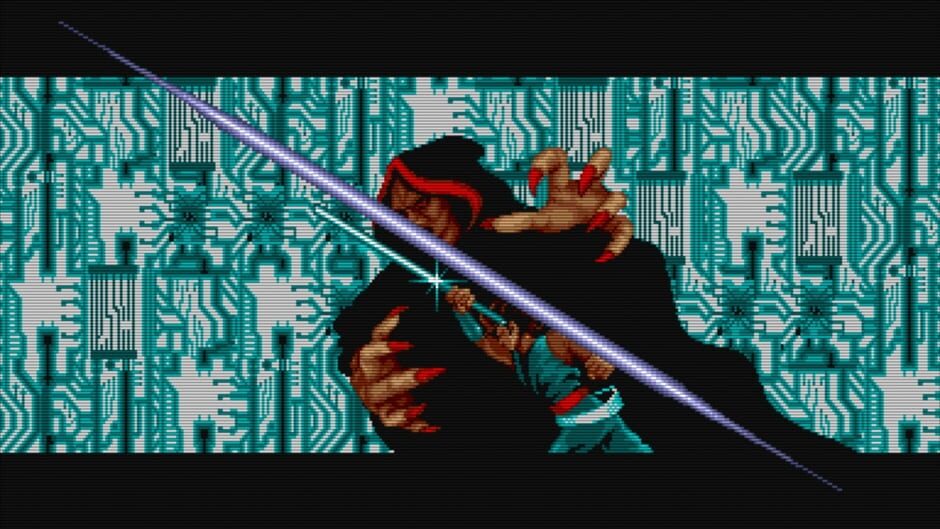
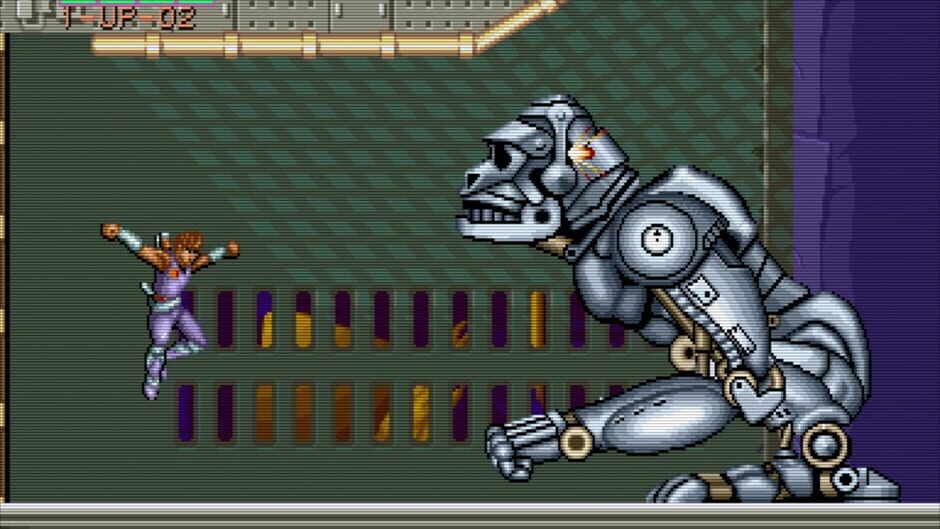
Strider screenshots


Watch on YouTube
Listings on The Game Traders
No active listings for Strider yet.
Be the first to list →Buyers looking for this
No active want ads for Strider yet.
Post a want ad →Popular games right now






Latest news mentioning Strider
- The Making Of: Strider 2 - One Of The Worst Sequels In Video Game History, And I Should Know - I Had To Test ItTime Extension · Sep 14
- Strider 2 Vinyl Soundtrack LaunchedRetroRGB · Aug 28
- Strider Arena – Beta Sign UpAlpha Beta Gamer · Jul 6