
Growl
Growl — frequently asked questions
- What platforms is Growl on?
- Growl was released on Arcade, Sega Mega Drive/Genesis.
- When did Growl release?
- Growl was first released on December 31, 1990.
About Growl
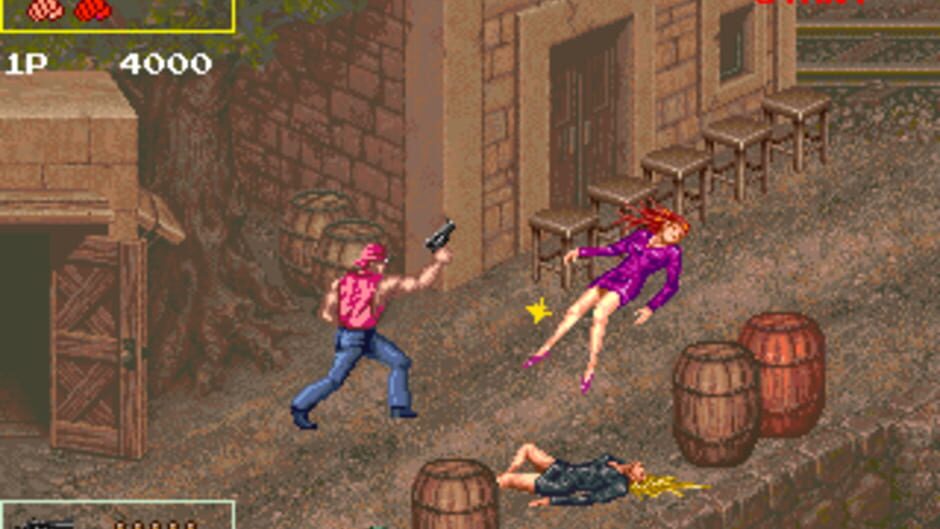
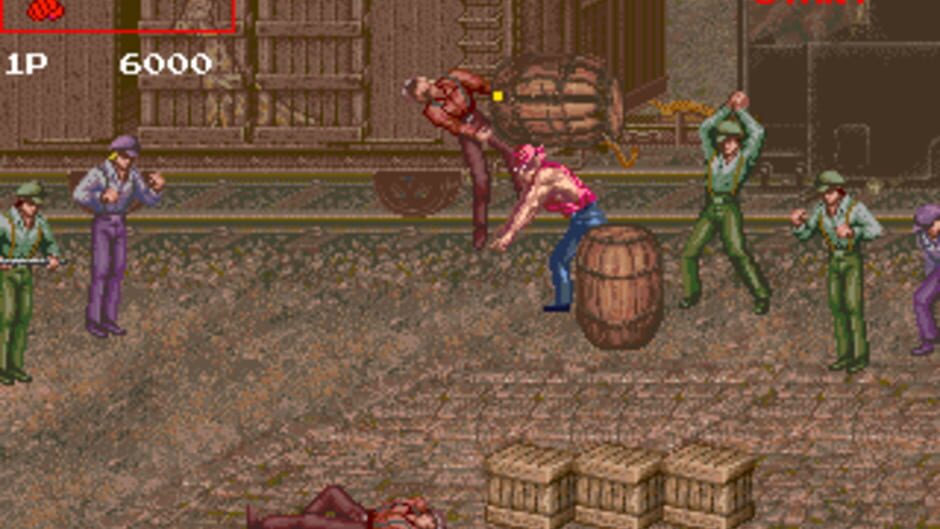
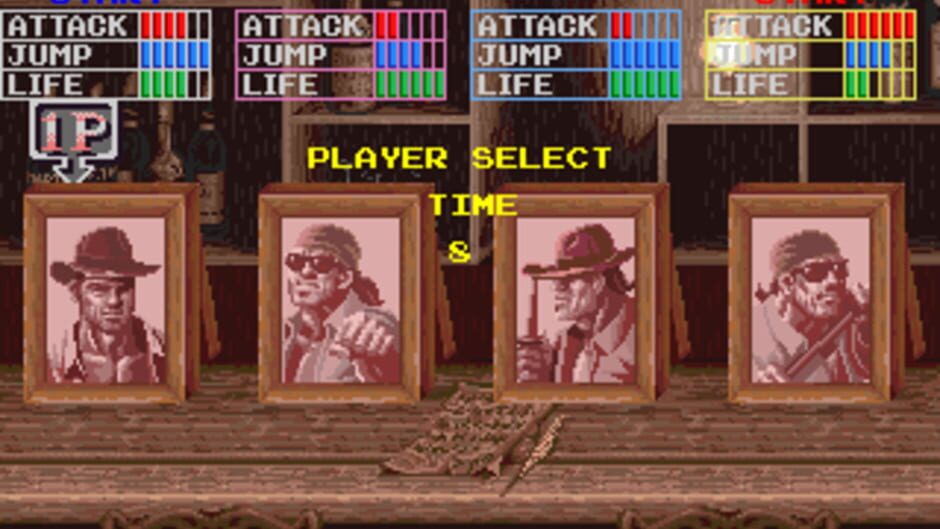
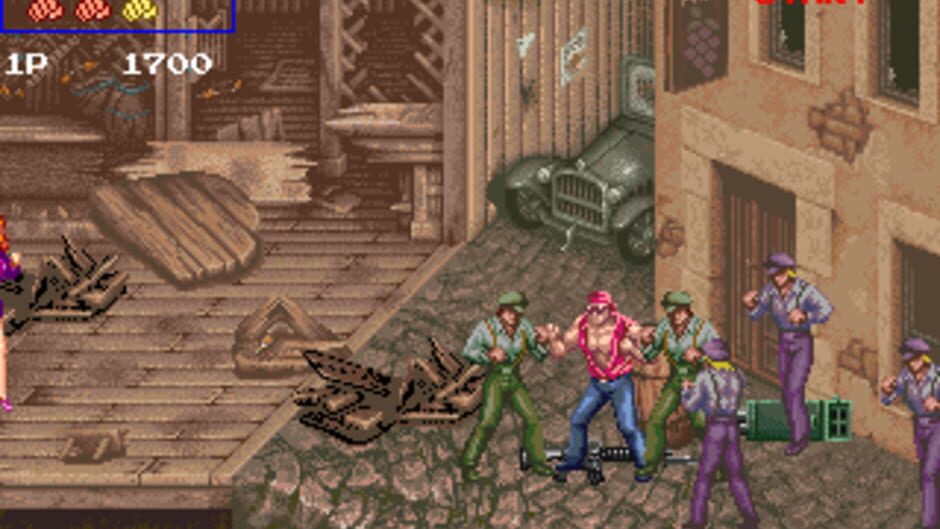
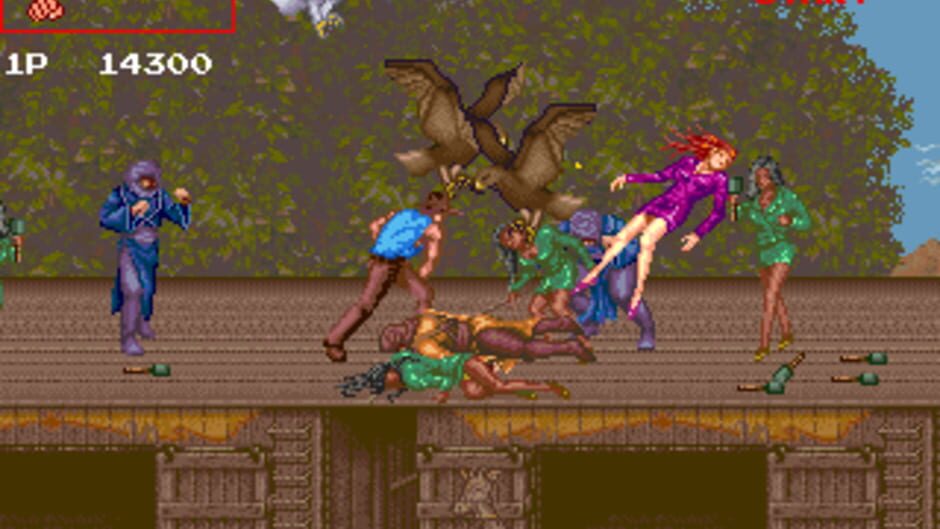
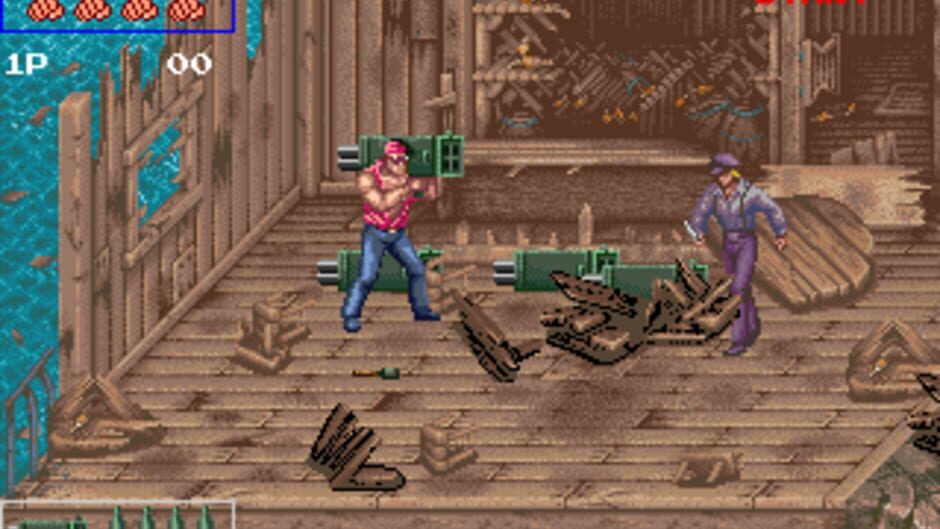
The player begins the game by choosing from one of four different forest rangers, each with a different amount of health, attack strength, and jumping height. The game's controls consists of an eight-way joystick for moving the character and two action buttons (attack and jump). The player can perform a variety of different attacks (punches, kicks, and finishing blows) depending on the position of an enemy. By pressing both buttons while surrounded by enemies, the player can perform a special attack that strikes every enemy around him. By pressing both buttons while holding the joystick upwards, the player will perform a longer jump. The player can procure weapons by destroying barrels and wooden crates or disarming certain enemies. There are a total of eight weapons which can be obtained: three melee weapons (a pipe, a sword and a whip), two throwing weapons (knives and hand grenades), and three firearms (a pistol, a machine gun, and a rocket launcher). The barrels and crates can also be picked up and thrown at enemies as well. When the machine gun or rocket launcher runs out of ammunition, these are still wielded by the player as melee weapons. The pistol, on the other hand, is thrown by the player after all of its bullets are used. The player can drop his current weapon by pressing down and attack while wielding it. If a weapon lies on the ground after a certain period, it will vanish completely. There are seven regular stages (called rounds) and a bonus game, for a total of eight stages. The locations include a city, a moving train, a boat, a jungle, a cavern, and the hideout of the poachers. There are six types of enemy characters throughout the game, excluding the final boss (who has two forms). There are also animal helpers that will help out the player after they're rescued from a poacher, such as an eagle, a herd of deer, and an elephant.
Summary via IGDB.
Game details
- Developer
- Taito
- Publisher
- Taito
- Game modes
- Single player, Co-operative
- Themes
- Action
Details via IGDB.
Reception
Every version compared
Prices, contemporary reception and the studio credited for each release
| Platform | Year | Loose | Complete | Sealed | Fake risk |
|---|---|---|---|---|---|
| Sega Genesis | 1991 | $87 | $225 | — | Medium |
Also released on: Arcade · Sega Mega Drive/Genesis. We haven’t priced or authenticated those versions yet.
Collector value & authenticity
Sega Genesis · PriceCharting sold data · Verified 2026-10-29
Other releases and variants
| Release | Loose | Complete | Sealed |
|---|---|---|---|
| Japanese release (Runark) | $62 | $161 | — |
How often it sells
- Loose: about 2 times a month
- Complete: about once a month
- Sealed: about once a year
Sales frequency from PriceCharting's completed-sale records, as of 2026-10-29.
Price over time
- Loose
- Complete
A loose copy sold for about $2.87 in Apr 2008, $48 five years ago, and $87 as of Oct 2026.
Show as table
| Month | Loose | Complete |
|---|---|---|
| Jan 2009 | $2.99 | — |
| Jan 2010 | $3.44 | — |
| Jan 2011 | $6.84 | — |
| Jan 2012 | $19.99 | — |
| Jan 2013 | $9.99 | — |
| Jan 2014 | $14.99 | $24 |
| Jan 2015 | $17.75 | $55 |
| Jan 2016 | $15.75 | $28 |
| Jan 2017 | $43 | $130 |
| Jan 2018 | $51 | $103 |
| Jan 2019 | $42 | $148 |
| Jan 2020 | $46 | $122 |
| Jan 2021 | $45 | $180 |
| Jan 2022 | $65 | $180 |
| Jan 2023 | $73 | $224 |
| Jan 2024 | $62 | $180 |
| Jan 2025 | $58 | $178 |
| Jan 2026 | $80 | $190 |
| Oct 2026 | $87 | $225 |
Monthly price estimates from PriceCharting's completed-sale records, sampled quarterly, through Oct 2026.
Release record
| Territory | Date | Product number | Barcode | Known board |
|---|---|---|---|---|
| North America | 1991 | 11076 | 020588010451 | 171-5703 · MPR-14338-SM |
| Japan | 15 November 1991 | — | — | — |
- Region
- JP+NA
- Released
- 1991
- Authenticity
- Med
A single-player arcade beat 'em up that the press judged poor, and one of the pricier US carts.
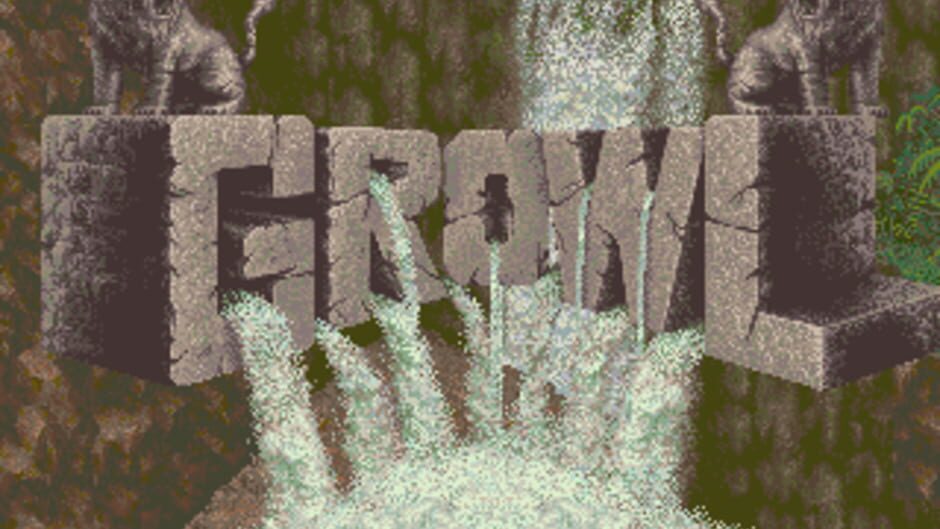
Growl is Taito's arcade beat 'em up, known in Japan as Runark, in which a forest ranger fights poachers who are driving wild animals to extinction. This is the Genesis version, developed by I.T.L and released in North America in 1991 and in Japan on 15 November 1991. It can be played by only one player, although all four characters are in it, named Gen, Burn, Khan and Jack.
Mean Machines, reviewing the Japanese import, called it a very poor beat 'em up.
What the press said at the time
“An old, old game that should be allowed to slip quietly, without further hassle from us, into obscurity.”
“Growl is a very poor beat 'em up which although fun in the short term, soon becomes a sad, shallow experience.”
How the Sega Genesis version differs
The Genesis port is single-player only, though all four characters are present and given individual names.
Special attacks can be used at any time but drain some health, and health is restored by picking up apples hidden in crates.
The cavern stage was redesigned completely and the M-16 was replaced with an AK-47.
Also on other platforms
Arcade
| Arcade | Taito |
- Arcade. The arcade game has four variations, selected by dipswitch settings.
Before you buy
Among US carts this is one of the priciest, and its risk tier is Medium, so check it carefully. A western cart has no notch in its shell, so a flat shell with a notch is a repro sign, and you should compare a board photo with the board listed on this page. The Japanese cart (Runark) usually costs noticeably less than the US one, but its cartridge has a different shape and fits a Western console only with an adapter or after removing two plastic tabs in its slot.
Growl screenshots
Watch on YouTube
Listings on The Game Traders
No active listings for Growl yet.
Be the first to list →Buyers looking for this
No active want ads for Growl yet.
Post a want ad →More games like Growl

Latest news mentioning Growl
No recent news mentions in our 30-day feed window.