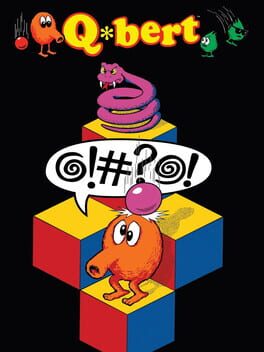
Q*bert
Q*bert — frequently asked questions
- Is Q*bert on Steam?
- No. Q*bert is not distributed on Steam, so there is no Steam Charts or SteamDB player count for it. Its live popularity is tracked here via Twitch viewership instead.
- What platforms is Q*bert on?
- Q*bert is available on Arcade, PlayStation 3, Atari 2600, ColecoVision, Intellivision, Atari 5200, Atari 8-bit, Commodore 64, Odyssey 2, SG-1000, TI-99/4A, VIC-20, ZX Spectrum, MSX, NES, Game Boy, Game Boy Color, mobile phone.
- When did Q*bert release?
- Q*bert was first released on October 18, 1982.
About Q*bert
Q*bert was a popular arcade game that was released on a large number of consoles in the early 1980s. It was developed and published by Gottlieb, and became their most successful game. The concept serves as a precursor to the isometric platformer genre, where the title character must work to turn all cubes to a certain colour in a psuedo-3D world, made 3D through isometric graphics in the same way that the Penrose Stairs was made. The game was widely successful and has become a highly recognizable brand of the 1980s gaming era.
Summary via IGDB.
Q*bert on Wikipedia
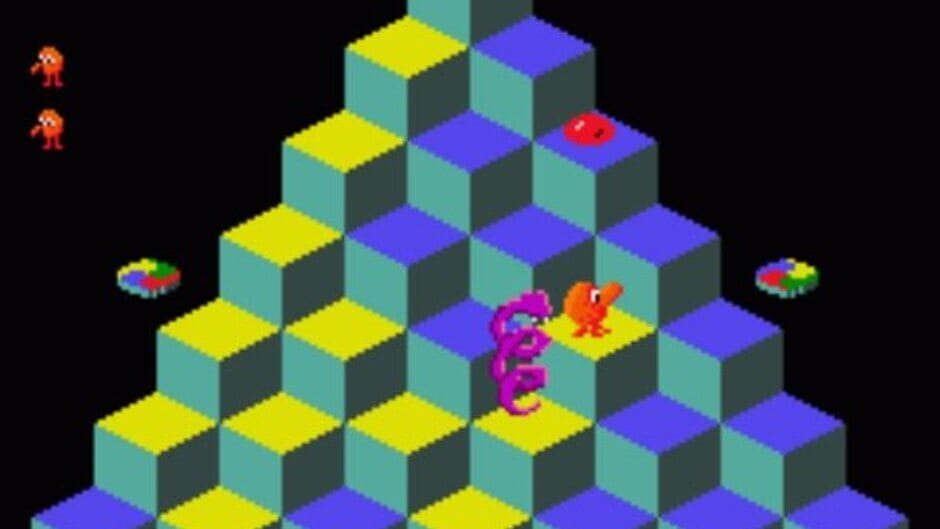
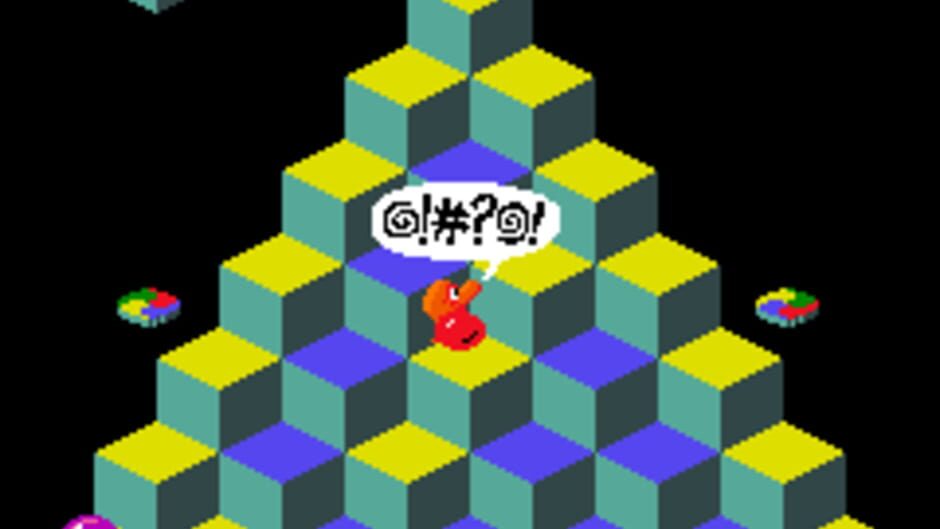
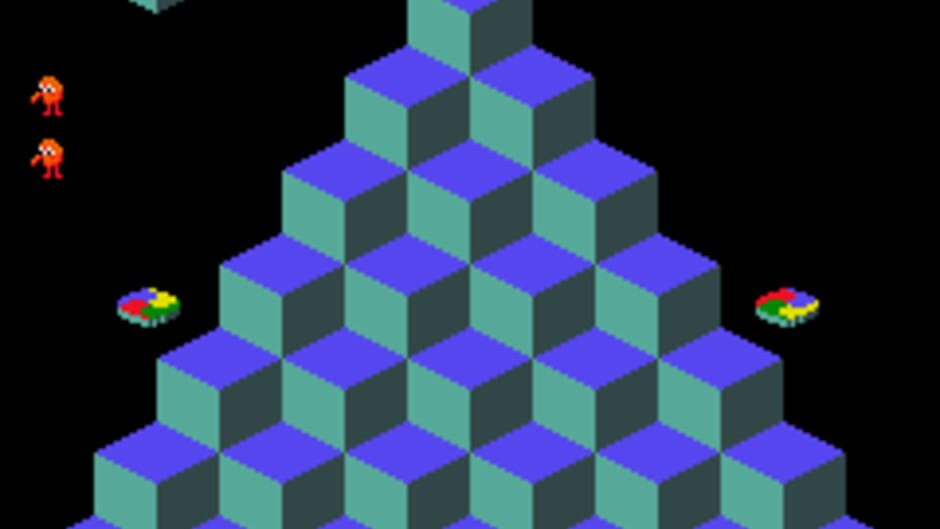
Q*bert is a 1982 action video game developed and published by Gottlieb for arcades. It is a 2D action game with puzzle elements that uses isometric graphics to create a pseudo-3D effect. The objective of each level in the game is to change every cube in a pyramid to a target color by letting Q*bert, the on-screen character, hop on top of the cube while avoiding obstacles and enemies. Players use a joystick to control the character.
Source: Wikipedia (text under CC BY-SA 4.0).
Game details
- Platforms
- Arcade, PlayStation 3, Atari 2600, ColecoVision, Intellivision, Atari 5200, Atari 8-bit, Commodore 64, Odyssey 2, SG-1000, TI-99/4A, VIC-20, ZX Spectrum, MSX, NES, Game Boy, Game Boy Color, mobile phone
- Developer
- Gottlieb
- Publisher
- Gottlieb
- Game modes
- Single player, Multiplayer
- Themes
- Action, Comedy
Details via IGDB.
Reception
Every version compared
Prices, contemporary reception and the studio credited for each release
| Platform | Year | Loose | Complete | Sealed | Period reviews | Built by |
|---|---|---|---|---|---|---|
| Atari 2600 | 1983 | $10 | $22 | $35 | 2 reviews | Parker Bros. |
Also released on: Arcade · PlayStation 3 · ColecoVision · Intellivision · Atari 5200 · Atari 8-bit · Commodore 64 · Odyssey 2 · SG-1000 · TI-99/4A · VIC-20 · ZX Spectrum · MSX · NES · Game Boy · Game Boy Color · mobile phone. We haven’t priced or authenticated those versions yet.
Collector value & authenticity
Atari 2600 · PriceCharting sold data · Verified 2026-10-06
Label variants
| Release | Loose | Complete | Sealed |
|---|---|---|---|
| Red Label | $14 | $17 | $52 |
Release record
| Territory | Label | Catalog # | Rarity |
|---|---|---|---|
| North America Atari | Red | CX26150 | Scarce |
| North America Parker Brothers | Standard | PB5360 | Common+ |
Also released in South America by Unknown, CCE.
Source: Catalog numbers, label types, rarity, controllers and player counts: AtariAge 2600 software database
- Region
- NA+EU
- Released
- 1983
- Controller
- Atari Joystick
- Players
- 1
- Authenticity
- Low
Parker Brothers' home version of Gottlieb's arcade hit, common and inexpensive.
Q*bert was Gottlieb's 1982 arcade hit, an isometric game in which you hop across a pyramid of cubes to change their color while avoiding enemies. It became Gottlieb's most successful video game and was ported widely.
Parker Brothers published the Atari 2600 version in 1983, with a PAL release in 1984, and Atari Corp. is also listed as a publisher of the 2600 cartridge.
What the press said at the time
| Computer Entertainer Vol. 2 No. 5 | August 1983 | Graphics ★★★½ · Play-Action ★★★½ |
| Electronic Fun with Computers & Games Vol. 2 No. 1 | November 1983 | 3½ joysticks |
“Amazingly little has been lost in the translation of Q*BERT for the Atari 2600. … It looks more like the original than we thought possible on this system, and play action is great!”
“Still, we loved him in the arcades and, largely due to Parker's sterling adaptation, we are going to love him at home, too. … Our answer to this pressing question is a resounding yes. Parker has done a noble job of bringing the little old hosenose home.”
“But let's give Parker Bros. their due — we have here a wonderful adaptation of this unique arcade game.”
“Parker Bros. has done a terrific job in translating the game to the various formats, in light of the various system limitations. First, the 2600 version is multi-screened with play action similar to the arcade version.”
Computer Entertainer rated graphics first and play action second, from four symbols (excellent) to one (poor) — stars in most years, diamonds in 1986–87 — comparing each game only with other games for the same system. Electronic Fun rated games out of four joysticks.
Cartridge & preservation record
Program size 4 KB, measured from the preserved dump.
Catalogue number as recorded for the physical release.
How the Atari 2600 version differs
The 2600 version drops the arcade's Escher-inspired look, shortens the pyramid by one row and draws the escape discs as horizontal lines.
Video Games warned that buyers might be a little disappointed, citing the lack of music, the removal of the characters Ugg and Wrongway, and unsteady sprite performance.
Enemies have no jumping animation and appear instantly on the next cube, so players cannot tell which way they are heading. IGN rated it the fourth-worst arcade port on the 2600 for this, though Electronic Games said it came much closer to the arcade game than it first appears.
Also on other platforms
Arcade · ColecoVision · Intellivision · Atari 5200 · Atari 8-bit · Commodore 64 · Odyssey 2 · SG-1000 · TI-99/4A · VIC-20 · ZX Spectrum · MSX · NES · Game Boy · Game Boy Color · mobile phone · PlayStation 3
| Atari 2600 | Parker Bros. |
- ColecoVision. Warren Davis considered the ColecoVision version the most accurate port of the arcade game, and Video Games' Mark Brownstein called it one of the best authorized versions.
- Atari 5200. Mark Brownstein judged the 5200 version inferior to the ColecoVision one because of the imprecise 5200 controller.
- Intellivision. Video Games named the Intellivision version the worst of the available ports, saying the system's controller was inadequate for the game.
Worth knowing
- Sold as "rare" in 1986. By spring 1986 the 2600 market had moved on far enough that Computer Entertainer's mail-order list sold brand-new copies under the heading "RARE GAMES — THESE ARE YOUR SPECIAL PRICES", at $19.00 (good through 10 May 1986).
Before you buy
Low risk and common. A red-label variant is priced separately and costs a little more loose, so check which label is in the photos if you are collecting variants. If you only want to play it, the standard cart is the cheapest route.
Q*bert screenshots
Watch on YouTube
Listings on The Game Traders
No active listings for Q*bert yet.
Be the first to list →Buyers looking for this
No active want ads for Q*bert yet.
Post a want ad →More games like Q*bert





Latest news mentioning Q*bert
No recent news mentions in our 30-day feed window.