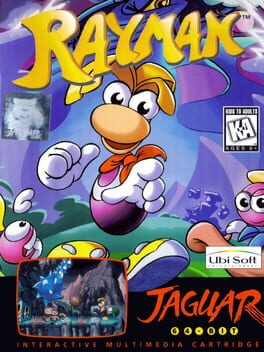
Rayman
Rayman — frequently asked questions
- Is Rayman on Steam?
- No. Rayman is not distributed on Steam, so there is no Steam Charts or SteamDB player count for it. Its live popularity is tracked here via Twitch viewership instead.
- What platforms is Rayman on?
- Rayman is available on Atari Jaguar.
- When did Rayman release?
- Rayman was first released on September 9, 1995.
About Rayman
Rayman for the Atari Jaguar is the most distinct version of the game. This is mostly due to the limitations of cartridge space and the Jaguar's weaker hardware. Differences range from levels having major gameplay and design changes to a lower quality soundtrack.
Summary via IGDB.
Rayman on Wikipedia
Rayman is a 1995 platform game developed by Ubi Pictures and published by Ubi Soft. The player controls Rayman, who must pursue Mr. Dark to recover the Great Protoon that used to keep the balance between nature and the people of Rayman's valley. The player must navigate the valley, defeat enemies with abilities gained throughout the game, and free captured Electoons, while also encountering a boss at the end of each thematic world.
Source: Wikipedia (text under CC BY-SA 4.0).
Game details
- Platforms
- Atari Jaguar
- Developer
- Ubi Pictures
- Publisher
- Ubi Soft Entertainment
- Game modes
- Single player
- Themes
- Action, Fantasy
- Series
- Rayman
Details via IGDB.
Collector value & authenticity
Atari Jaguar · PriceCharting sold data · Verified 2026-07-24
- Region
- NA+EU
- Released
- 1995
- Authenticity
- Med
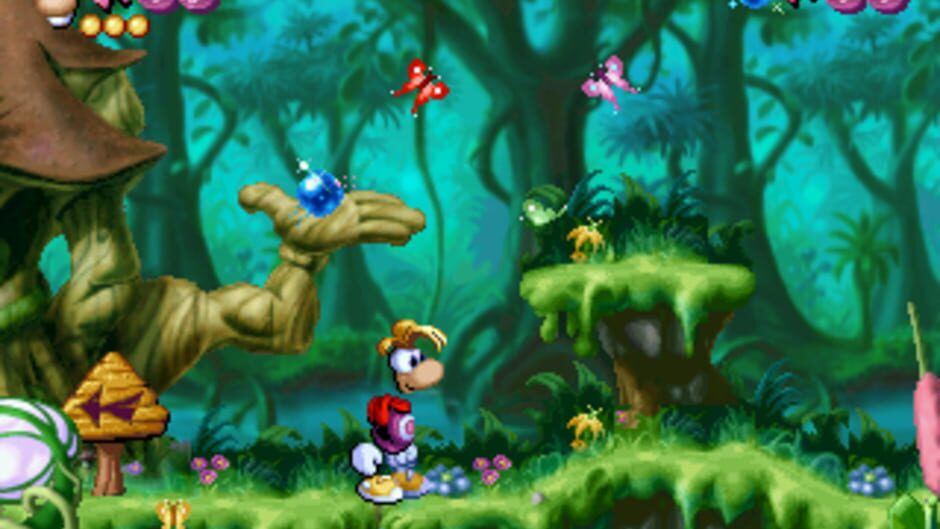
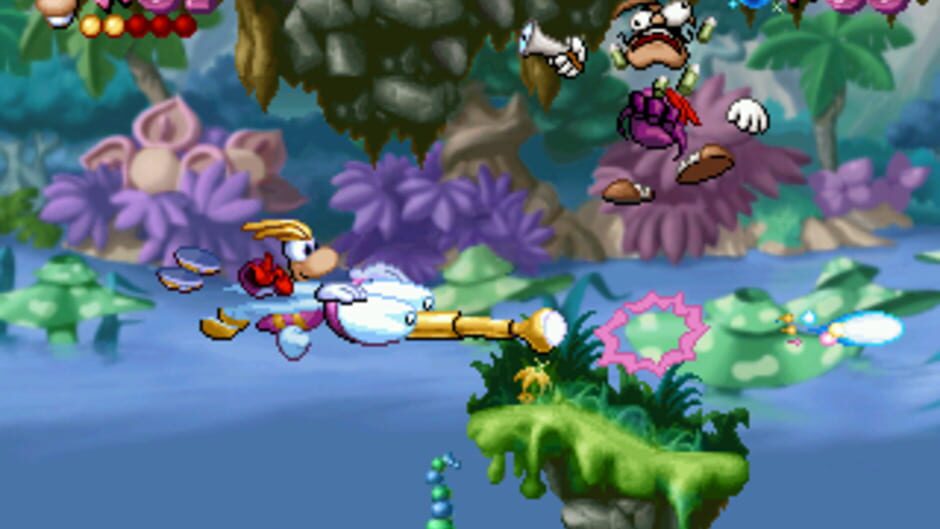
Straightforwardly the best-looking game on the console — a cart that looks like it wandered in from a better machine.
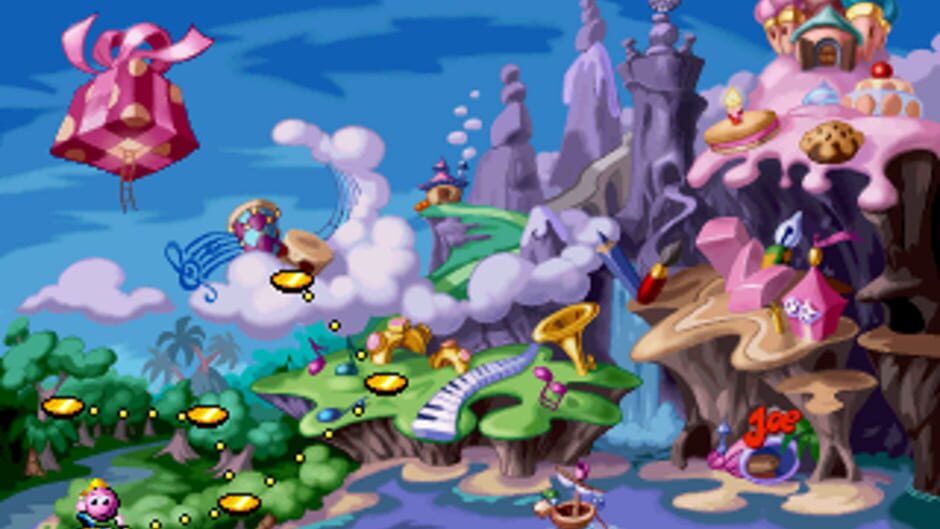
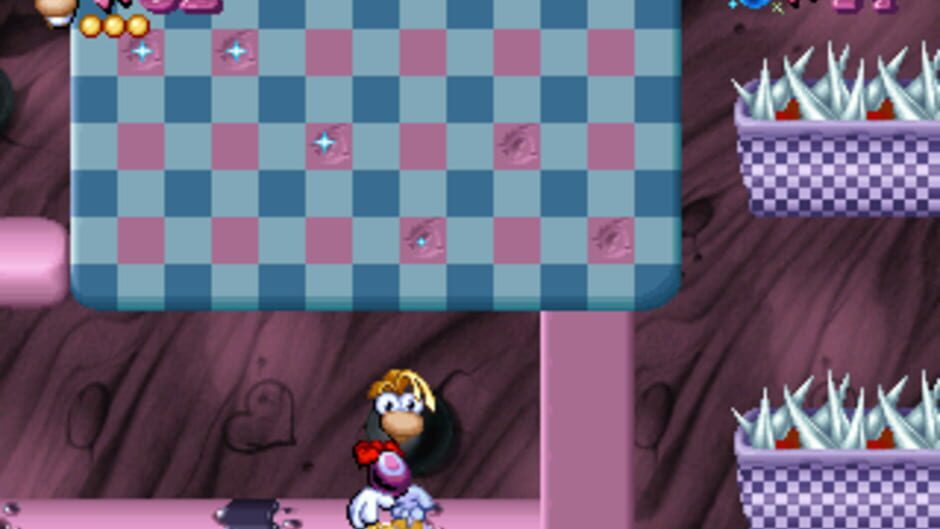
Hand-drawn, densely animated, colored like a children's book, and the Jaguar renders it without compromise — on a platform whose visual identity is untextured polygons and muddy ports. The design is classic-era Ubi Soft: beautiful, inventive, and extremely difficult. Rayman's reputation for cheerful brutality starts here.
Two catalog corrections worth stating plainly. Rayman is frequently listed as a Jaguar exclusive — it isn't; it shipped on PlayStation, Saturn, and PC. And while the Jaguar genuinely was Rayman's original console development platform (the project moved there after the SNES-CD collapsed), the PlayStation version reached North American stores first, by about twelve days in September 1995. "Born on Jaguar, beaten to shelves by PlayStation" is the accurate version of the story.
How it was made
Ubi Pictures developed the Atari Jaguar version, published by Ubi Soft. Credited: directed by Agnès Haegel; music by Rémi Gazel, Didier Lord, Stéphane Bellanger, Christophe Héral.
What the press said at the time
| GameSpot | 11 June 1996 | 7.4/10 |
| TA | 3/5 | |
| NLife | 7/10 | |
| MC | 72/100 | |
| OC | 59% recommend | |
| Retro | 84% | |
| Sega Saturn Magazine | #1, November 1995 | 78% |
Cartridge & preservation record
Cartridge ROM capacity 32 megabit (4 MB), measured from the preserved cartridge image.
Catalogue part number C3669T
Cartridge data from the No-Intro preservation database (metadata only — names, sizes and checksums, no game data).
How the Atari Jaguar version differs
Both GamePro and Electronic Gaming Monthly placed the Jaguar version below the PlayStation release, citing lower audio quality and slower control response — GamePro nonetheless called it one of the best games on the system and a showcase for the hardware.
Announced in late 1994 for a fall/December 1994 Jaguar release, then reported for June 1995. The 32X and 3DO versions announced alongside it were both cancelled.
Rayman was at one point considered as a mascot character for the Jaguar.
Also on other platforms
- Super NES. The game was being developed for the Super NES CD-ROM peripheral until Nintendo cancelled it in 1993, which is what set Rayman looking for a new home and eventually brought it to the Jaguar.
- PlayStation. Ubi Soft made it a launch title for the North American and European PlayStation releases, deliberately pairing it with powerful new hardware to compete against Japanese platformers. It is one of the twenty games built into the PlayStation Classic released in December 2018.
- Sega Saturn. Added once the team decided the more capable new hardware was worth targeting. A preview demo containing the first of six worlds was released for Saturn and PlayStation in April 1996.
- 32X. A version was reported by American magazines as due in 1995 and was cancelled.
- 3DO. Also reported as in development in 1995 and cancelled.
- MS-DOS. Released December 1995 in Europe and April 1996 in North America, and the only version to receive expansions — Rayman Designer in 1997 with a level editor and 24 new levels, and Rayman by His Fans in 1998 with 40 fan-made levels.
- Game Boy Advance. Rayman Advance, converted by Digital Eclipse, arrived in June 2001 and was praised as one of the best-looking games on the system. A Game Boy Color version in early 2000 used Ubisoft's "Ubi Key" infrared feature to share unlockable content between games.
Worth knowing
- Rayman was considered as the Jaguar's mascot. The Jaguar never had one — the console row records its mascot as none — and Rayman was once floated for the job. Michel Ancel's game reached the platform by elimination: it began on the Atari ST, pivoted to the Super NES CD-ROM, and was orphaned when Nintendo cancelled that peripheral in 1993. The team then moved production to the Jaguar specifically because they believed it could render the graphics they were aiming for. Only later, when the PlayStation and Saturn appeared, did those become targets too.
- The game that took Ubisoft public. Michel Guillemot committed 15 million francs and split production between two sites — Ubi Soft's Montreuil headquarters handled the technical work while Ancel's creative team worked from his hometown of Montpellier. It became Ubisoft's first substantial commercial success and is credited with enabling the company's 1996 stock market flotation. Magazine advertisements had promised the Jaguar version for autumn or December 1994; it did not arrive until 1995.
Before you buy
Steady demand from Rayman collectors as well as Jaguar collectors — the crossover audience firms up prices, and the Jaguar box art differs from the PS1/Saturn releases. Medium counterfeit risk: franchise demand plus a modest late-1995 print run is the combination that eventually attracts repros.
Authenticity & condition — Atari Jaguar
Specific to the format this title shipped in
Buying a Jaguar cartridge
Cartridges are the durable half of this library — the risk is provenance, not decay. The platform has an active post-commercial scene, so the question is usually which era a cartridge is from rather than whether it still works.
- Ask for a photo of the label edge and the cartridge back. Reproductions are usually printed on adhesive photo stock and sit proud of the label recess.
- Donor shells are the common trick: sanding marks on the back, or adhesive ghosting where an older label was lifted, are the strongest signals.
- Cartridges are region-free on this platform, so a cheaper PAL copy plays on a North American console — a price difference is not evidence of a fake.
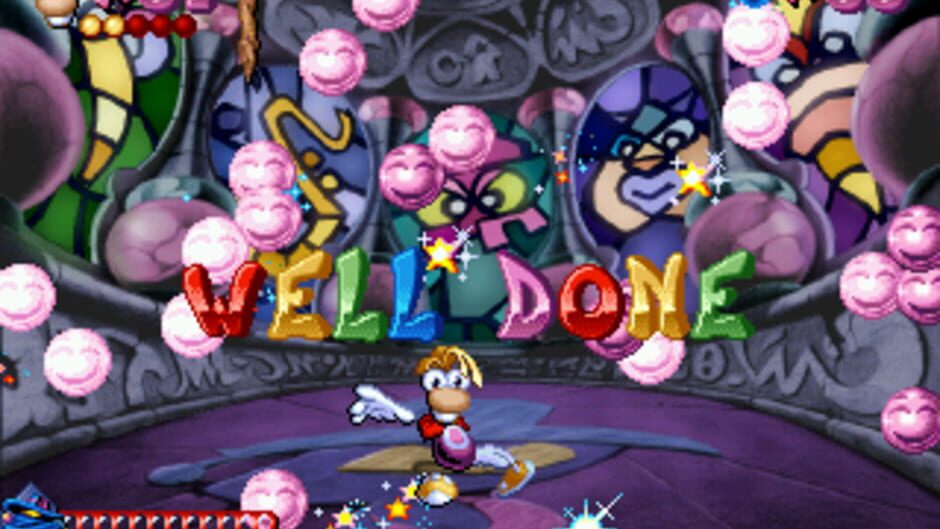
Rayman screenshots
Watch on YouTube
Listings on The Game Traders
No active listings for Rayman yet.
Be the first to list →Buyers looking for this
No active want ads for Rayman yet.
Post a want ad →Upcoming Rayman events
Popular games right now



Latest news mentioning Rayman
- Rayman's Globox Returns With an Official New Design in December 2026Steam News · Oct 5
- Rayman's Globox Returns With an Official New Design in December 2026Game Rant · Oct 5
- Rayman Legends Retold Releases New Overview TrailerBleeding Cool Games · Oct 5
- Rayman Just Threw Shade at GTA 6Game Rant · Sep 29
- Rayman: 30th Anniversary Edition: Switch $26, PS5 $25Slickdeals Gaming · Sep 28
- ICYMI: Here's A Look At Rayman's Legends Retold Launch EditionNintendo Life · Sep 27
- Rayman Legends Retold Just Roasted GTA 6's Collector's EditionTheGamer · Sep 26
- Ubisoft: Rayman Legends Retold at launch includes map, lithographs, slipcase & Rayman Origins EnhancedMy Nintendo News · Sep 26
- Rayman Shades GTA 6 With Collector's Edition That Includes Not Just One Game, But TwoDualShockers · Sep 25
- Rayman Legends Retold Does Physical Media the Right Way on PS5Push Square · Sep 25