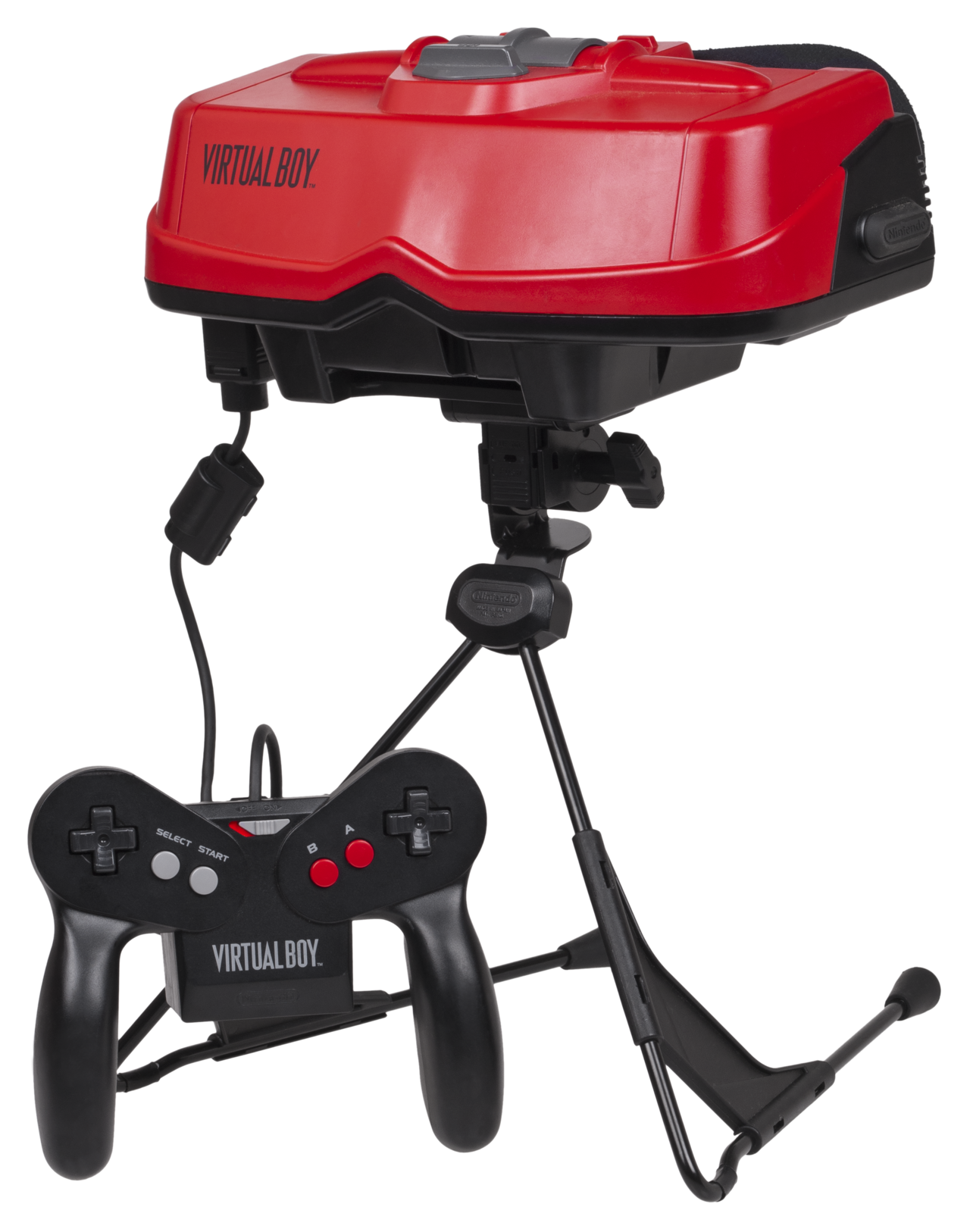
Virtual Boy
- Manufacturer
- Nintendo
- Production
- 1995–1996
- Generation
- Gen 5
- Type
- Tabletop
- Region
- JP / NA
- Launch price
- $179
- Media
- Cartridge
- Units sold
- 770,000
About Virtual Boy
Nintendo launched the Virtual Boy in Japan on 21 July 1995 and in North America that August, promoting it as the first console to render true stereoscopic 3D. What buyers got was a red monochrome display on a tabletop stand, viewed through a binocular eyepiece. The two objections that killed it were on the record within months: at a Blockbuster launch event covered by Electronic Gaming Monthly in November 1995, an attendee named Wally Krol summed both of them up. “I think the technology is neat. I wish it was cheaper. If it was three colors, it would be worth it; one color, red, doesn’t excite me too much.” It was Gunpei Yokoi’s machine in every sense. The designer of the Game Boy conceived the hardware and produced almost every first-party game released for it — Wario Land, Mario’s Tennis, Teleroboxer. Reporting on his departure from Nintendo in October 1996, EGM described him as having been criticised over the Virtual Boy, a project he had reportedly kept pushing despite concerns from other company officials about its prospects. He died the following year. The platform died twice, and the two dates explain today’s collector market better than any rarity claim does. Japan was finished first, on 22 December 1995 — and four Japanese titles shipped inside that final month, two of them on the day of discontinuation itself. North America ran on until August 1996. Those eight months are why Japan’s last releases now trade in the hundreds and thousands, while America’s last two, arriving into a market that was still open, stayed cheap. Twenty-two games shipped, and their prices invert their reputation. Nintendo Power ran a reader-voted Virtual Boy chart from November 1995 to July 1996; Virtual Boy Wario Land held the top spot in every issue from February onward, and it costs about $70 today. Jack Bros. and Waterworld — the two most valuable North American cartridges — never placed once in seven charts. The most expensive game on the system, Virtual Lab, was published unfinished by a small Japanese studio that had learned Nintendo was pulling out.
Library & collector facts
22licensed games
- North America: 14
- Japan: 19
What a Virtual Boy costs right now
PriceCharting sold data · Verified 2026-08-22
Console — North America (NTSC)
- Loose
- $372
- Complete in box
- $774
- Sealed / new
- $1,956
Console — Japan
- Loose
- $285
- Complete in box
- $600
- Sealed / new
- $850
Accessories
| Item | Loose | CIB |
|---|---|---|
| AC Adapter Tap (NA — sold separately at retail) | $93 | $146 |
| AC Adapter Tap (JP) | $39 | $65 |
| Eye Shade | $82 | $100 |
| Controller (JP, boxed) | $111 | $250 |
| Stereo Headphones | — | $38 |
| FlashBoy+ flashcart | $149 | — |
| HyperFlash32 eInk flashcart | $522 | $534 |
The gap between a $372 loose unit and a $774 CIB one is almost entirely stand, tap, inserts and box condition — not the headset. A sealed console is $1,956, so more than four fifths of a sealed unit’s value is packaging. Buying to play? Buy loose. Buying to hold? The box is the asset.
The vertical-lines problem — inspect before you buy
Every Virtual Boy on the market today is a ticking clock. Nintendo attached the ribbon cables between each LED display array and its driver board with a conductive adhesive rather than solder. Thirty years on, that adhesive is failing on essentially every unit ever made. It is not a question of whether a Virtual Boy develops display faults — it is a question of whether it has yet.
What failure looks like
- Vertical black bars or missing columns in one eye
- A "snow" or static effect across the image
- Flickering that comes and goes with temperature
- The image cutting out when the headset is tapped or moved
- One eye going fully dark while the other stays perfect (it almost always starts in one eye, not both)
How to test before you buy
- Warm the unit up for a full ten minutes — adhesive failures are heat-dependent and a cold unit often passes a thirty-second test.
- Check each eye independently by closing the other.
- Use Nintendo's own Alignment Check Screen: on a game's title screen, after the music starts, press Left, B, Down, A, Up on the RIGHT-hand control pad. Enter it slowly; it often takes a few tries. Nintendo published this code as its official display-diagnostic step.
- Failing that, look at a bright, mostly-red screen — Mario's Tennis pause menu works; Galactic Pinball's table is better.
- Gently flex the headset while watching. Any flicker under flex is the adhesive letting go.
Listing language that means “this has vertical lines”
The community repair strips the adhesive and solders the ribbon in place (or temporarily re-melts the existing adhesive bond with controlled heat). Done properly the solder fix is permanent; done badly it is a dead display. Expect $60–$150 for a competent third-party repair per display — factor that into any "as-is" purchase before you decide it is a deal.
Listing a Virtual Boy on The Game Traders? Photograph the display — both eyes, warm, showing a bright screen. It takes one minute with a phone pressed to the lens, it moves your listing above every "as-is" competitor, and under our condition-grading a documented working display is the difference between a fair-graded and an excellent-graded unit.
How selling works →What "complete in box" actually means
The retail box contained
- Headset unit (with attached eyeshade)
- Stand — center post + two legs (the most commonly broken or missing part)
- Controller
- Battery Pak (6× AA holder, clips to the controller)
- Mario's Tennis pack-in cartridge
- Console instruction manual
- Precautions / health & safety insert
- Cardboard inner tray and styrofoam inserts
- Outer box
NOT included at North American retail — a separate purchase: the AC Adapter Tap. A listing advertising "complete with AC adapter" is either a Japanese unit, an aftermarket adapter, or a seller who bundled a separately-sold accessory. None are wrong, but none are what CIB means — and the tap alone runs about $93 loose.
Grading shorthand
- Complete
- Box, both manuals, tray, stand (both legs), controller, Battery Pak, pack-in cart
- Console complete
- Everything but the pack-in game
- Loose
- Headset + controller only
- Parts
- Any of: cracked stand post, missing eyeshade, confirmed display fault
The complete library — all 22 games
Community scores from Planet Virtual Boy · prices PriceCharting · Verified 2026-08-22
North America (14) — NTSC pricing
| Game | Score | Loose | CIB | Sealed | Availability | Fake risk |
|---|---|---|---|---|---|---|
| Jack Bros.1995 | 84 | $900 | $2,180 | — | NSO May 14, 2026 | High |
| Waterworld1995 | 40 | $223 | $434 | $631 | Cartridge only | Med |
| 3-D Tetris1996 | 69 | $173 | $312 | $456 | NSO Feb 17, 2026 | Med |
| Nester's Funky Bowling1996 | 70 | $82 | $185 | $325 | Cartridge only | Med |
| Virtual Boy Wario Land1995 | 95 | $70 | $170 | — | NSO Feb 17, 2026 | Med |
| Vertical Force1995 | 74 | $67 | $137 | — | NSO May 14, 2026 | Low |
| Mario Clash1995 | 68 | $59 | $143 | $550 | NSO Mar 10, 2026 | Low |
| Panic Bomber1995 | 70 | $59 | $150 | $401 | Cartridge only | Low |
| Golf1995 | 65 | $46 | $77 | — | NSO Feb 17, 2026 | Low |
| Teleroboxer1995 | 65 | $35 | $68 | $120 | NSO Feb 17, 2026 | Low |
| Red Alarm1995 | 77 | $30 | $70 | $204 | NSO Feb 17, 2026 | Low |
| Galactic Pinball1995 | 73 | $30 | $70 | $124 | NSO Feb 17, 2026 | Low |
| Virtual League Baseball1995 | 51 | $25 | $40 | $44 | Cartridge only | Low |
| Mario's Tennis1995 | 70 | $19 | $321 | $510 | NSO Mar 10, 2026 | Low |
Japan-exclusive (8) — JP pricing
| Game | Score | Loose | CIB | Sealed | Availability | Fake risk |
|---|---|---|---|---|---|---|
| Virtual Lab1995 | 39 | $1,596 | $2,150 | — | Cartridge only | High |
| SD Gundam: Dimension War1995 | 59 | $1,009 | $1,470 | — | Cartridge only | High |
| Virtual Bowling1995 | 71 | $722 | $1,025 | — | NSO May 14, 2026 | High |
| Space Invaders: Virtual Collection1995 | 59 | $571 | $683 | — | NSO May 14, 2026 | High |
| The Mansion of Innsmouth1995 | 63 | $300 | $388 | $542 | NSO Feb 17, 2026 | High |
| Space Squash1995 | 78 | $155 | $179 | $245 | Cartridge only | Med |
| Virtual Fishing1995 | 48 | $91 | $129 | $170 | NSO (JP only) May 14, 2026 | Med |
| V-Tetris1995 | 71 | $29 | $36 | $39 | NSO May 14, 2026 | Low |
Reproduction carts — the trap on this platform
The Virtual Boy has more homebrew and reproduction cartridges in circulation than it has official games. Many are built on donor PCBs harvested from cheap official carts — Mario’s Tennis and 3-D Tetris are the usual victims — so a repro can carry a genuine Nintendo shell, a genuine board, and genuine screws. Shell inspection will not save you.
| Title | Genuine | Reproduction | Spread |
|---|---|---|---|
| Virtual Lab | $1,596 | $179 | 9× |
| SD Gundam: Dimension War | $1,009 | $65 | 16× |
What actually distinguishes them
- The label
- Repro labels are inkjet or laser prints on adhesive stock. Genuine Nintendo-era labels have offset-printed dot patterns visible under 10× magnification and a slightly textured finish. A phone macro shot is usually enough.
- Language
- English-language SD Gundam: Dimension War, Virtual Lab, or Insmouse no Yakata does not exist officially — every one is a fan translation on a repro cart. If the label is in English, the question is answered.
- The donor tell
- Repro builders harvest shells from cheap official carts, so ask for a straight-on photo of the cartridge back and of the label recess. Sanding or scraping marks where an old label was lifted, adhesive ghosting around the edge of the current label, or a label that does not fill the same footprint as the one it replaced are all donor evidence. A genuine Nintendo label sits square in the recess with no ghost outline around it.
- Price as a signal
- Nobody sells a genuine Virtual Lab for $200. If the price is a tenth of market and the seller is responsive and friendly, that is the tell.
None of this makes reproductions worthless — a well-made English Space Invaders repro trades around $430 against $571 for the genuine Japanese copy, because for players the translation is much of the value. The problem is never the repro. The problem is the repro sold as an original.
Buying guide by budget
A tested loose console — about $372 on its own — and nothing else. Buy from someone who photographed the display. Skip anything "as-is".
A tested loose console, the AC Adapter Tap at about $93, and five sub-$60 games — Mario's Tennis, Virtual League Baseball, V-Tetris, Red Alarm, Galactic Pinball or Teleroboxer. That's most of what's genuinely fun on the platform, for around $615 all in.
A CIB console with an intact stand and a clean box. The box is where the value lives, and where it is most fragile.
Wario Land and Mario Clash CIB, then start on Jack Bros. Import territory begins here.
You are buying Virtual Lab and SD Gundam: Dimension War — and you should be buying them graded or from a seller who accepts returns.
Frequently asked questions
Why does my Virtual Boy have vertical lines in one eye?
Nintendo glued the display ribbon cables with a conductive adhesive instead of soldering them. Three decades later that bond is failing on nearly every unit, producing vertical black lines, missing columns, or a flickering eye. It is the platform’s defining fault, and a competent solder repair (about $60–$150 per display — there is no factory solder to reflow, the fix adds it) is permanent.
How much is a Virtual Boy worth in 2026?
A loose North American console runs about $372, complete-in-box around $774, and sealed near $1,956; Japanese units are cheaper loose (~$285). Games swing wildly — from $19 for Mario’s Tennis to $1,596 for Virtual Lab. All prices here are PriceCharting sold data, verified and refreshed quarterly.
How many Virtual Boy games are there?
Twenty-two official cartridge releases: fourteen in North America and nineteen in Japan (eleven shared, eight Japan-exclusive, three North America-exclusive). Two further titles, Zero Racers and D-Hopper, were completed in 1996, cancelled when the platform died, and finally released on 4 August 2026 on Virtual Boy – Nintendo Classics — digital only, so there is no cartridge for either. A third completed game, Bound High!, has still never had an official release.
Was the Virtual Boy ever released in Europe or Australia?
No. Nintendo shipped seven official hardware SKUs and not one of them was European: Japan first (21 July 1995), then North America (August 1995), with Canada and Mexico taking the North American hardware under their own distribution, plus two retail kiosk variants — a Japanese “mosaic” box and a North American white box. The seventh is the one nobody covers: Playtronic Industrial released the Virtual Boy in Brazil on 18 September 1995 at R$399, bundled with Mario’s Tennis and Portuguese manuals. It never came to Europe, the UK, or Australia — any “PAL Virtual Boy” listing is mislabelled, and a Brazilian box that matches no NA or JP packaging is a real Nintendo product, not a fake.
Does the Virtual Boy actually damage your eyes?
There is no evidence of permanent damage, but the stereoscopic red display causes genuine eye strain, headaches, and fatigue — Nintendo shipped it with mandatory rest-reminder pauses. Play in short sessions. That discomfort, more than the games, is what doomed the hardware commercially.
Do Virtual Boy games have save batteries that die?
Six do. Wario Land, Teleroboxer, Galactic Pinball, 3-D Tetris, SD Gundam: Dimension War and Virtual Fishing save to battery-backed SRAM using a soldered CR1616 cell that is now over thirty years old — if saves vanish at power-off, that is the battery. Four more (Golf, Virtual League Baseball, Virtual Bowling, Jack Bros.) use passwords and have no battery to fail. The rest do not save at all. Worth knowing before you pay four figures for SD Gundam.
What is the rarest Virtual Boy game?
By price, Virtual Lab (~$1,596 loose) and SD Gundam: Dimension War (~$1,009) — both tiny-run Japan exclusives. Neither is on Nintendo Switch Online, so the cartridge is still the only way to play, and both are heavily reproduced, making authentication essential above a few hundred dollars.
Can you play Virtual Boy games on a modern display?
Not natively — the twin LED arrays render a stereoscopic red image no TV can show directly. Options are flashcarts (FlashBoy+, HyperFlash32) on real hardware, emulators with anaglyph or 3D output, or Virtual Boy – Nintendo Classics on Switch. That service needs one of two paid accessories — a $99.99 replica headset or a $24.99 cardboard viewer — and the lineup is region-split: sixteen games in the West (fourteen original cartridges plus Zero Racers and D-Hopper, two 1996 titles that were cancelled and never had a cartridge at all) and seventeen in Japan, which also got Virtual Fishing on 14 May 2026. For a player rather than a collector that $99.99 is the real alternative to a $372 loose console that is statistically already failing.
Is a reproduction Virtual Boy cartridge worth buying?
For playing an unavailable Japan exclusive, a good reproduction is a legitimate cheap option — a quality English Space Invaders repro runs about $430 against $571 for the genuine Japanese cartridge. The danger is a repro sold as genuine: a real Virtual Lab is $1,596, its reproduction $179. If a rare cart’s label is in English, it is a reproduction.
Serial & barcode registry — every documented release
63 release records across 22 titles and 4 territories · 54 carry a serial · Verified 2026-08-22
Every Virtual Boy cartridge carries a serial moulded or printed on the label and, outside Japan, a barcode on the box. Together they identify the territory, the publisher and whether a cartridge was ever a retail product at all — which is more than the label alone can tell you, because the label is the one part a reproduction can copy perfectly. The full registry below is the reference; these are the rules worth knowing before you read it.
- Only the suffix is the region — the middle four letters are not. A serial reads VUE-XXXX-USA or VUE-XXXX-JPN, and only that suffix indicates territory. The inner code is a PROJECT code frozen during development, so it does not track the region or even the title: 3-D Tetris ships as VUE-VPBE-USA because the cancelled Japanese version was called Polygo Block. Red Alarm swaps J→E between its two regions while Wario Land keeps the J in both. And Brazilian and Mexican cartridges both carry -USA, so a -USA suffix means "the North American production run", not "sold in the United States".
- The fourth letter is the ROM build — and on five titles it proves the imports are identical. The code’s last letter tracks which BUILD the cartridge holds, not where it was sold. J is the Japanese build, E a separate English one. Most dual-region titles were rebuilt and swap letters — Red Alarm ships as VREJ in Japan and VREE in America, and the same happens to Panic Bomber, Vertical Force, Golf, Jack Bros. and Virtual League Baseball. But five kept the J in both territories, because Nintendo shipped the Japanese ROM unchanged: Mario’s Tennis (VMTJ), Teleroboxer (VTBJ), Galactic Pinball (VGPJ), Mario Clash (VMCJ) and Virtual Boy Wario Land (VWCJ). ROM preservation records confirm it — each of those five is catalogued as a single dump covering Japan and the USA, in English. For those five titles only, the Japanese cartridge is byte-identical to the American one and plays in English, so buy whichever region is cheaper.
- Two Japan-exclusive cartridges are in English anyway. V-Tetris and Virtual Bowling never left Japan, but ROM preservation records both as English-language dumps — so neither needs a translation patch or a fan translation to play, and a listing offering an “English V-Tetris” is not describing a reproduction. That is the opposite of the rule for the genuinely Japanese-language grails: an English-labelled SD Gundam: Dimension War, Virtual Lab or Insmouse no Yakata does not exist officially and is always a repro.
- The barcode identifies the publisher, and only two NA titles are not Nintendo. Every Nintendo-published North American cartridge starts 045496. Exactly two North American titles were published by someone else, and both announce it in the barcode: Waterworld starts 020295, which is Ocean’s, and Virtual League Baseball starts 741648, which is Kemco’s. That makes the check symmetric — a Waterworld box with a 045496 barcode is as wrong as a Mario Clash box with Ocean’s.
- Brazil is in the barcode; Mexico is only in the paperwork. Playtronic’s Brazilian releases carry their own barcodes under the 7896273 company prefix (789 is GS1 Brazil), so a Brazilian copy is identifiable from the box alone. Mexican copies distributed by Gamela México reuse the North American serial AND the North American barcode — the only difference is the documentation, which either adds a Spanish instructivo (Teleroboxer ships six pieces, not five) or substitutes one (Mario Clash). A Mexican copy therefore cannot be verified from a barcode photo; ask for the paperwork.
- Store-display carts are proven by the DIS- prefix, never by the label. Nintendo’s not-for-resale display cartridges carry a DIS- prefix on the serial: DIS-VUE-VWCJ-USA for Wario Land, DIS-VUE-VREE-USA for Red Alarm. A "Not For Resale" label is trivial to print, and the premium is real, so verify the serial and ignore the sticker. Red Alarm is the library’s most attractive forgery target here — the retail cartridge is cheap, so the dollar gap between it and the display version is the widest on the platform.
- Some serials were assigned to games that never shipped. Acclaim got far enough with a North American release of The Mansion of Innsmouth to be assigned VUE-VIME-USA before it was cancelled. No cartridge bearing that code was ever manufactured, so one offered for sale is a reproduction regardless of how good the label looks. The same logic covers every cancelled row in the registry.
- Nintendo’s North American numbers run in one unbroken block. Every Nintendo-published North American cartridge sits in a single consecutive run of GS1 item references — 045496-77001 through 77011 — and the order is allocation order, not release order: Mario Clash holds 77002 despite shipping after two titles numbered above it. There is exactly one gap, at 77003. A Nintendo-published North American Virtual Boy barcode outside 77001–77011 does not belong to this platform. (Waterworld and Virtual League Baseball are outside the block because Nintendo did not publish them.)
- Consecutive numbers give away who really published what. Japanese publishers numbered their Virtual Boy releases back to back, so the barcodes prove relationships the labels do not state. Red Alarm and Golf are 4988604-24001 and 24002 — both T&E Soft. Vertical Force and Panic Bomber are 4988607-00520 and 00521 — both Hudson. And Nintendo’s own Japanese block runs 4902370-50224, 50225 and 50226 for Teleroboxer, Mario’s Tennis and Galactic Pinball, the three launch titles it published itself, with the console nine numbers earlier at 50215. Playtronic’s Brazilian numbers show the opposite pattern — Mario Clash at 7896273-60280 sits thirty-two numbers below Wario Land and Panic Bomber at 60312 and 60313, so Brazil got at least two separate release waves rather than one.
- Mario's Tennis has no North American barcode at all. It was a bare pack-in cartridge in the console box, never a standalone North American retail SKU, so there is no North American barcode to check against. The only North American boxes are Blockbuster rental units printed "For Display Only". Any North American "complete in box" Mario’s Tennis is therefore a rental box, a Japanese import, or a mislabelled listing — worth knowing, because the CIB price is more than sixteen times the loose one.
| Title | Territory | Date | Serial | Barcode | MSRP |
|---|---|---|---|---|---|
| 3-D Tetris | North America | 22 Mar 1996 | VUE-VPBE-USA | 045496770112 | $29.99 |
| Mexico Gamela México | — | VUE-VPBE-USA | 045496770112 | — | |
| JapanCancelled | Feb 1996 (planned) | — | — | ¥5,800 | |
| Galactic Pinball | Japan | 21 Jul 1995 | VUE-VGPJ-JPN | 4902370502268 | ¥4,900 |
| North America | 21 Aug 1995 | VUE-VGPJ-USA | 045496770051 | $39.95 | |
| Mexico Gamela México | — | VUE-VGPJ-USA | 045496770051 | — | |
| Brazil Playtronic Industrial Ltda. | 18 Sep 1995 | VUE-VGPJ-USA | — | R$69.00 | |
| JapanDemo | — | — | — | — | |
| Golf | Japan T&E Soft, Inc. | 11 Aug 1995 | VUE-VVGJ-JPN | 4988604240021 | ¥6,500 |
| North America | November 1995 | VUE-VVGE-USA | 045496770082 | — | |
| Mexico Gamela México | — | VUE-VVGE-USA | 045496770082 | — | |
| Jack Bros. | Japan | 29 Sep 1995 | VUE-VJBJ-JPN | 4984995900018 | — |
| North America | October 1995 | VUE-VJBE-USA | 730865530014 | — | |
| Mario Clash | Japan | 28 Sep 1995 | VUE-VMCJ-JPN | 4902370502275 | ¥4,900 |
| North America | 30 Sep 1995 | VUE-VMCJ-USA | 045496770020 | $39.95 | |
| Mexico Gamela México | — | VUE-VMCJ-USA | 045496770020 | — | |
| Brazil Playtronic Industrial Ltda. | — | VUE-VMCJ-USA | 7896273602804 | — | |
| JapanDemo | — | — | — | — | |
| Mario's Tennis | Japan | 21 Jul 1995 | VUE-VMTJ-JPN | 4902370502251 | ¥4,900 |
| North AmericaPack-in | Aug 1995 | VUE-VMTJ-USA | — | — | |
| JapanDemo | — | — | — | — | |
| Nester's Funky Bowling | North America | 26 Feb 1996 | VUE-VNFE-USA | 045496770105 | — |
| Mexico Gamela México | — | VUE-VNFE-USA | 045496770105 | — | |
| Brazil Playtronic Industrial Ltda. | — | VUE-VNFE-USA | — | — | |
| Panic Bomber | Japan Hudson Soft Company, Ltd. | 21 Jul 1995 | VUE-VH2J-JPN | 4988607005214 | ¥4,900 |
| North America | Dec 1995 | VUE-VH2E-USA | 045496770099 | — | |
| Mexico Gamela México | — | VUE-VH2E-USA | 045496770099 | — | |
| Brazil Playtronic Industrial Ltda. | — | VUE-VH2E-USA | 7896273603139 | — | |
| Red Alarm | Japan | 21 Jul 1995 | VUE-VREJ-JPN | 4988604240014 | ¥4,900 |
| North America | Aug 1995 | VUE-VREE-USA | 045496770044 | $39.95 | |
| Brazil Playtronic Industrial Ltda. | 18 Sep 1995 | VUE-VREE-USA | — | R$69.00 | |
| Mexico Gamela México | — | VUE-VREE-USA | 045496770044 | — | |
| North AmericaNot for resale | — | DIS-VUE-VREE-USA | — | — | |
| SD Gundam: Dimension War | Japan Bandai Co., Ltd. | 22 Dec 1995 | VUE-VSDJ-JPN | 4902425484020 | ¥5,800 |
| Space Invaders: Virtual Collection | Japan Taito Corporation | 1 Dec 1995 | VUE-VSPJ-JPN | 4988611940181 | ¥4,980 |
| Space Squash | Japan Coconuts Japan Entertainment Co., Ltd. | 29 Sep 1995 | VUE-VSSJ-JPN | 4953507950889 | ¥4,900 |
| North AmericaCancelled | August 1995 (planned) | — | — | — | |
| Teleroboxer | Japan | 21 Jul 1995 | VUE-VTBJ-JPN | 4902370502244 | ¥4,900 |
| North America | Aug 1995 | VUE-VTBJ-USA | 045496770013 | $39.95 | |
| Mexico Gamela México | — | VUE-VTBJ-USA | 045496770013 | — | |
| Brazil Playtronic Industrial Ltda. | 18 Sep 1995 | VUE-VTBJ-USA | — | R$69.00 | |
| JapanDemo | — | — | — | — | |
| The Mansion of Innsmouth | Japan I'Max | 13 Oct 1995 | VUE-VIMJ-JPN | 4988762060103 | ¥4,900 |
| North AmericaCancelled Acclaim Entertainment, Inc. | — | VUE-VIME-USA | — | — | |
| V-Tetris | Japan Bullet-Proof Software, Inc. | 25 Aug 1995 | VUE-VTRJ-JPN | 4988627000305 | ¥4,980 |
| North AmericaCancelled | — | — | — | — | |
| Vertical Force | Japan Hudson Soft Company, Ltd. | 12 Aug 1995 | VUE-VH3J-JPN | 4988607005207 | ¥4,900 |
| North America | December 1995 | VUE-VH3E-USA | 045496770075 | — | |
| Mexico Gamela México | — | VUE-VH3E-USA | 045496770075 | — | |
| Virtual Bowling | Japan Athena Co., Ltd. | 22 Dec 1995 | VUE-VVBJ-JPN | 4988679000247 | ¥5,300 |
| Virtual Boy Wario Land | Japan | 1 Dec 1995 | VUE-VWCJ-JPN | 4902370502343 | — |
| North America | 27 Nov 1995 | VUE-VWCJ-USA | 045496770068 | — | |
| Mexico Gamela México | — | VUE-VWCJ-USA | 045496770068 | — | |
| Brazil Playtronic Industrial Ltda. | — | VUE-VWCJ-USA | 7896273603122 | — | |
| North AmericaNot for resale | — | DIS-VUE-VWCJ-USA | — | — | |
| JapanDemo | — | — | — | — | |
| Virtual Fishing | Japan Pack-In-Video Co., Ltd | 6 Oct 1995 | VUE-VVFJ-JPN | 4988110700019 | ¥5,800 |
| North AmericaCancelled THQ Inc. | Fall 1996 (planned) | — | — | — | |
| Virtual Lab | Japan J-Wing Co., Ltd. | 8 Dec 1995 | VUE-VJVJ-JPN | 4995151000039 | ¥5,500 |
| Virtual League Baseball | Japan Kemco | 11 Aug 1995 | VUE-VVPJ-JPN | 4906571615611 | ¥5,480 |
| North America Kemco America Inc. | 11 Sep 1995 | VUE-VVPE-USA | 741648004011 | — | |
| Waterworld | North America | 21 Dec 1995 | VUE-VWEE-USA | 020295130015 | $39.95 |
| Mexico Gamela México | — | VUE-VWEE-USA | 020295130015 | — |
Dashes are unresearched fields, not absent ones — a Mexican or Brazilian release rarely has a published date, and pack-in cartridges have no standalone barcode because they were never sold on their own. Per-title notes, package contents and prices are on each game’s page.
Release timeline
- 🇯🇵 Japan
- July 21, 1995
- 🇺🇸 North America
- August 14, 1995
- Lifespan
- 1 year on market
Pricing
Launch price (1995)
- 🇺🇸 USD
- $179
- In today's USD
- ~$394 (inflation-adjusted)
Compatibility
- Backward compatible with
- None
- Region locked
- No (region-free)
Launch titles & exclusives
Mario's Tennis · Galactic Pinball · Red Alarm · Teleroboxer · Panic Bomber (Japan only at launch — North America waited until December 1995)
Mario's Tennis
Virtual Boy Wario Land · Galactic Pinball · Red Alarm · Teleroboxer · Jack Bros. · Mario Clash · Nester's Funky Bowling · Vertical Force · 3-D Tetris
3-D Tetris (22 March 1996, North America) — the last Virtual Boy game released anywhere, shipped three months after Japan had already been discontinued and five months before North America followed. Its serial reads VUE-VPBE for "Polygo Block", the Japanese version that was cancelled. Jack Bros. (October 1995) is often miscalled the last release; it is notable for something else — the first Megami Tensei game ever released in North America.
Jack Bros. (JP+NA, ~$2,180 CIB — the platform record, and cheap loose at ~$900); Virtual Lab (JP-only, ~$1,596 loose / ~$2,150 CIB — the most expensive cartridge to buy loose); SD Gundam: Dimension War (JP-only, ~$1,009 loose / ~$1,470 CIB); Virtual Bowling (JP-only, ~$1,025 CIB). A sealed North American console (~$1,956) outruns every cartridge but Jack Bros. Bound High! was completed in 1996 and has still never had an official release. Prices verified 2026-08-22 — refresh alongside the pricing.ts dataset.
Hardware specs
- Cpu
- NEC V810 @ 20 MHz
- Ram
- 64 KB work PSRAM, 128 KB graphics DRAM, 128 KB Video RAM
- Weight
- 760 g
- Dimensions
- 254 × 203 × 101 mm
- Display Output
- 384×224
Hardware revisions
- Original Virtual Boy (VUE-001)(1995)
The only hardware revision Nintendo shipped. No mid-life board or shell revision exists.
⚠ The defining fault is the display connection, and the mechanism is routinely described wrongly. Nintendo bonded the ribbon cables between each LED array and its driver board with a CONDUCTIVE ADHESIVE rather than soldering them. Thirty years on that bond is failing on essentially every surviving unit, producing vertical black lines, missing columns, static, or a flickering eye. Failures are heat-dependent, so a cold unit can pass a short test and fail after ten minutes. The permanent repair adds solder — there is no factory joint to reflow.
Launch colorways & special editions
- Japanese kiosk unit (VUE-S-RA) — the "mosaic" box shipped to Japanese retail demo stands
- North American kiosk unit (VUE-S-RA-USA) — the white-box store demo variant
- Brazilian release (Playtronic Industrial, 18 September 1995, R$399) — bundled Mario's Tennis with Portuguese manuals; the least-documented official SKU and rarely priced correctly
- Mexico (VUE-S-RA01, distributed by Gamela México) and Canada (bilingual documentation) shipped the North American hardware under their own distribution
Modding scene
- Difficulty
- hard-mod
- Custom firmware
- N/A (ROM-based); flashcarts: FlashBoy Plus, HyperFlash32 (eInk)
Reception & legacy
Poor — eye strain complaints, monochromatic red display, lack of true portability (tabletop stand required), high price; commercial failure within months
Reports of headaches, nausea, and eye strain damaged the brand; Gunpei Yokoi reportedly left Nintendo partly in fallout from the project's failure; only 22 commercial games released worldwide
Commercial disaster but a fascinating preserved-failure case study; precursor concept to modern VR; small collector base treats it as the ultimate Nintendo curio
Regional sales
- 🇺🇸 North America
- 630,000 units
- 🇯🇵 Japan
- 140,000 units
References
More from Nintendo
No Virtual Boy listings yet. List yours or browse similar items.
Virtual Boy in the news
Recent coverage mentioning the Virtual Boy, gathered from 80+ gaming-news sources.

VBoy Color Virtual Boy Emulator
A free, open-source Virtual Boy emulator called VBoy Color was just released, that allows you to play it in true stereoscopic 3D via a Quest VR Headset. It’s also compatible with Windows, Linux, macOS and Android via both 2D and 3D modes. And like the name states, it adds color to the games. Check...

Virtual Boy Games Can Now Be Played In Full Colour Thanks To New Emulator
🤝 Don't want to see ads? Become a premium member for $3 a month and support an independent publication today! A new emulator for PC and Meta Quest has launched specifically for the Virtual Boy, allowing retro gamers to turn the overpowering red graphics into full colour
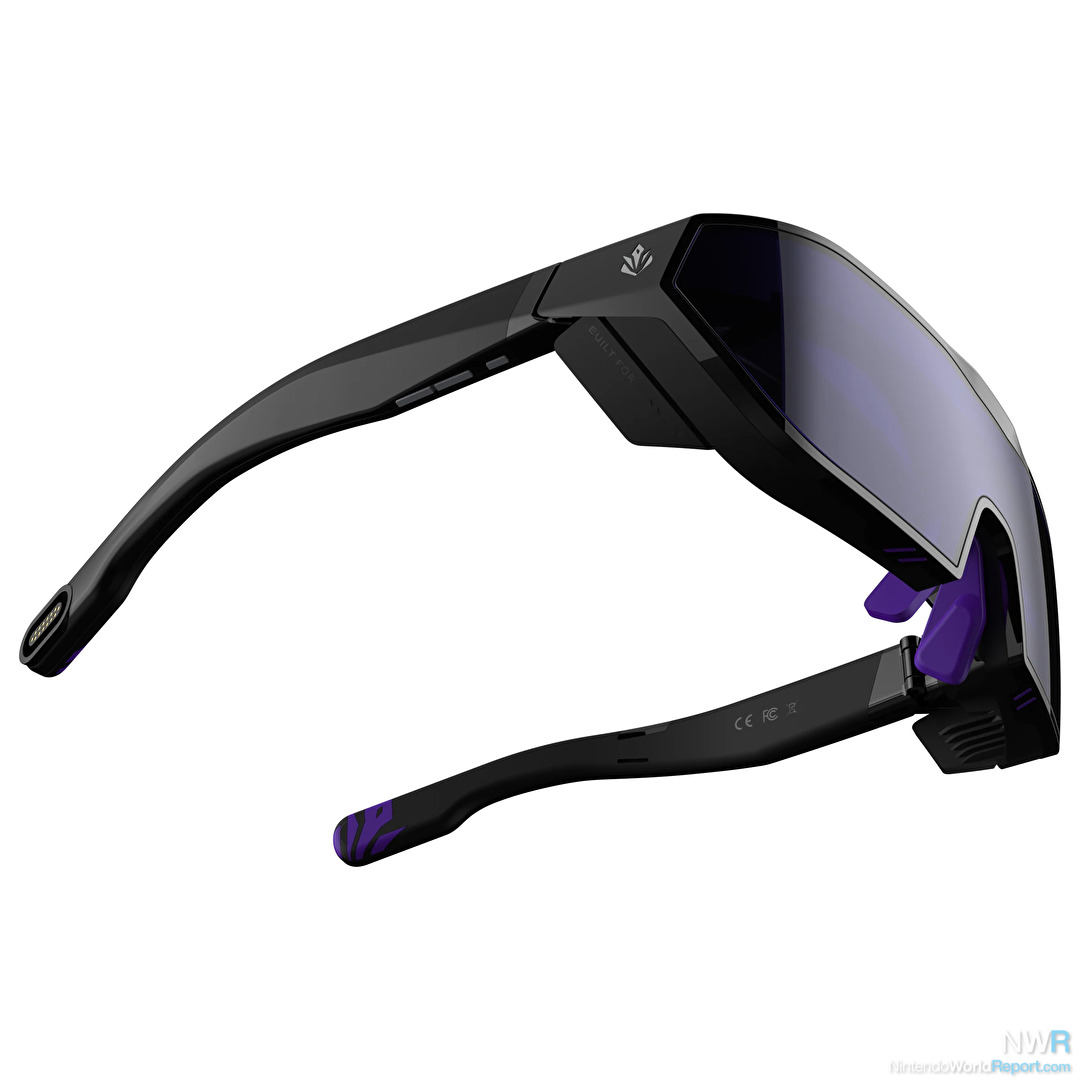
The ELO Sentinel XR Gaming Glasses (Switch 2) Hands-on Preview
A big promise with even bigger expectations Nintendo and XR gaming is a combination that we don’t hear about quite often. Could it have something to do with the failure of the Virtual Boy? A redemption story now, with its games now playable through Nintendo Switch Online, Virtual Boy titles still...

MrCART 128 Virtual Boy ROM Cart
Kevin Mellott has just opened pre-orders on the next evolution of the MrCart: A traditional “ROM Cart” for the Nintendo Virtual Boy. This next revision is also designed by original creator Mr Flower and has quite a few upgrades: Flash capacity has increased from 32 Mbit to 128 Mbit (16 MB), game...
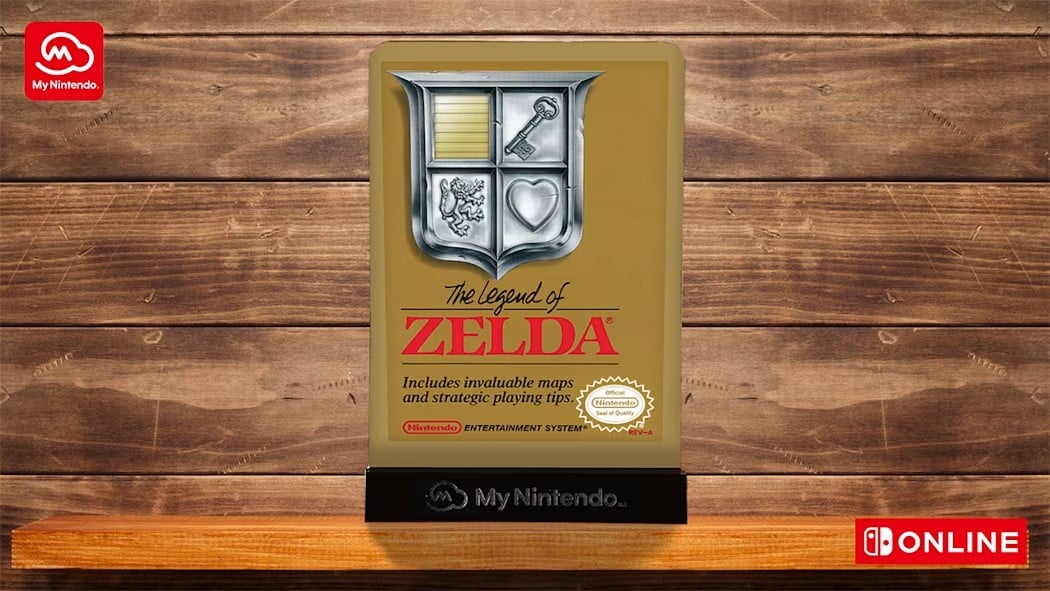
Nintendo Store Adds Some New Exclusives For Switch Online Members (North America)
A Zelda metal desktop display and Virtual Boy glasses case. The Nintendo Store has been updated this week in North America with some new "exclusives". These can be purchased with Platinum Points and are available to Switch Online members. Read the full article on nintendolife.com

My Nintendo adds Zelda desktop metal display, Virtual Boy glasses case
Two more rewards are up on My Nintendo in North America, and both are exclusive to Nintendo Switch Online members. First up, for 1000 points, you can claim the Zelda desktop metal display. The panel is based on the series’ very first game and sits in an acrylic base etched with the My Nintendo...